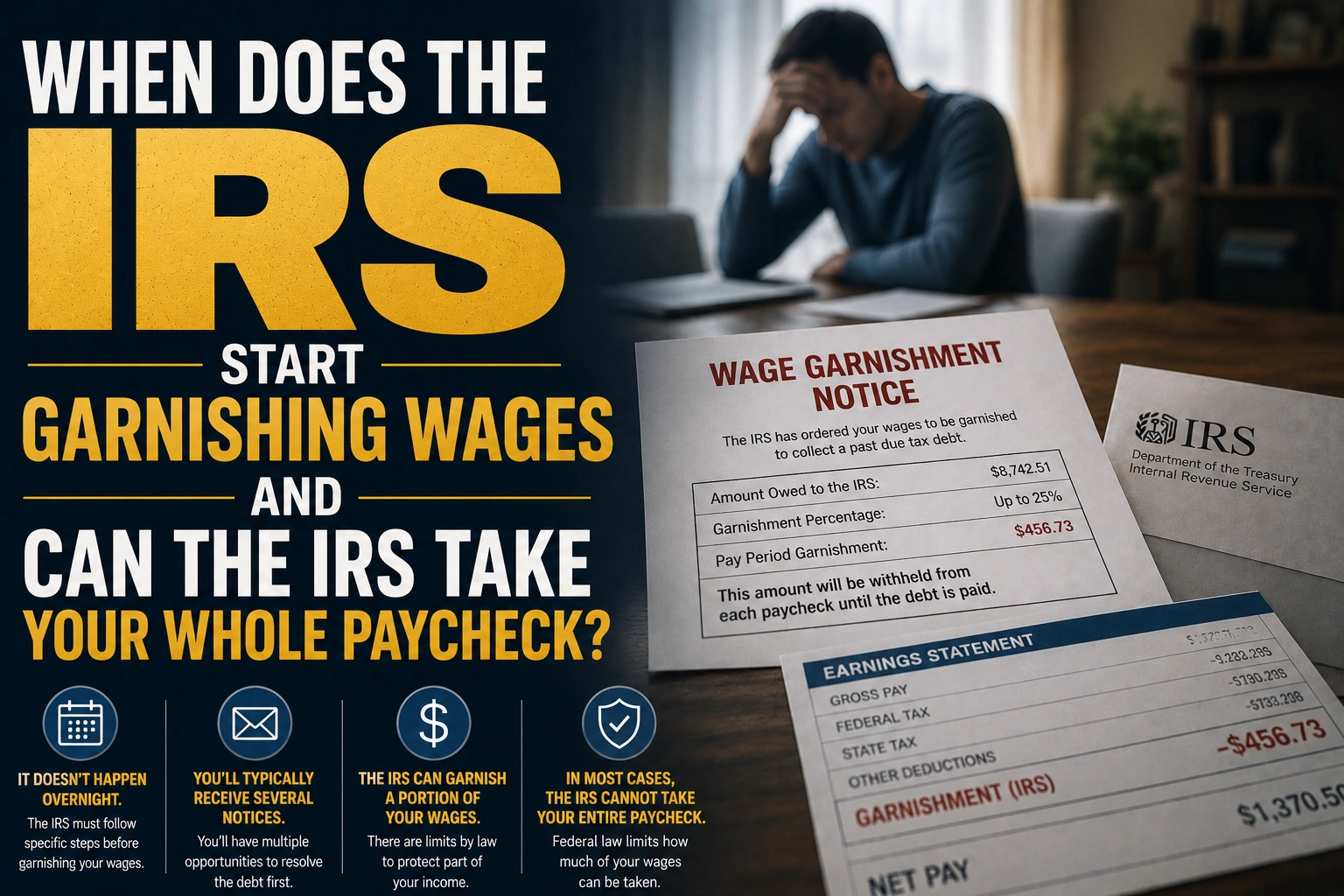
When Does the IRS Start Garnishing Wages and Can the IRS Take Your Whole Paycheck?
Receiving an IRS notice about wage garnishment can feel overwhelming, especially for taxpayers already struggling with financial pressure. Many people ask questions such as “when does IRS start garnishing wages,” “can the IRS take your entire paycheck,” or “why is there a tax levy on my paycheck.”
The good news is that the IRS typically does not begin wage garnishment without warning. The agency follows a legal collection process that includes multiple notices and opportunities to resolve tax debt before levying wages.
At Tax Law Advocates, tax attorney Yongho David Cho and tax resolution professional Jamie Roman help taxpayers stop wage levies, negotiate IRS resolutions, and protect income from aggressive collection actions.
What Is an IRS Wage Garnishment?
An IRS wage garnishment, also called a wage levy, occurs when the IRS legally takes a portion of your paycheck directly from your employer to satisfy unpaid tax debt.
Unlike private creditors that usually require a court judgment, the IRS has broad federal collection authority and can issue levies administratively after following required notice procedures.
If you are wondering why there is a tax levy on your paycheck, it usually means the IRS believes:
- You owe unpaid federal taxes
- Prior notices were ignored or unresolved
- Collection enforcement has escalated
- No acceptable payment arrangement exists
The levy remains active until:
- The tax debt is paid
- A resolution agreement is approved
- The IRS releases the levy
- The collection period expires
When Does IRS Start Garnishing Wages?
The IRS does not usually begin garnishing wages immediately after taxes become overdue.
The collection timeline often includes several stages before wage garnishment begins.
Initial IRS Balance Due Notices
The IRS typically begins by mailing notices informing taxpayers about unpaid balances.
Common notices may include:
These notices explain:
- The amount owed
- Interest and penalties
- Collection risks
- Payment options
Ignoring these notices increases the likelihood of enforcement.
Final Notice Before Garnishment
Before the IRS can garnish wages, it generally must issue a:
Final Notice of Intent to Levy and Notice of Your Right to a Hearing
This notice is extremely important because it gives taxpayers a legal opportunity to challenge or resolve the debt.
The IRS must usually wait at least 30 days after this final notice before garnishing wages.
How Long Before IRS Garnishes Wages?
Many taxpayers ask how long before IRS garnishes wages after missing payments.
The timeline varies depending on:
- The amount owed
- Filing compliance
- Prior communication with the IRS
- Existing payment agreements
- IRS collection activity levels
In many cases, wage garnishment may begin several months after the original balance due notice, although some cases escalate faster.
Tax attorney David Cho explains that proactive communication with the IRS early in the process can often prevent levies entirely.
Can the IRS Take Your Whole Paycheck?
One of the biggest fears taxpayers have is whether the IRS can take your whole paycheck.
The IRS generally cannot leave you completely without income, but federal wage levies can still be financially devastating.
Can the IRS Take Your Entire Paycheck?
The IRS usually must leave taxpayers with an exempt amount based on:
- Filing status
- Number of dependents
- Standard exemption calculations
Everything above that exempt amount may potentially be subject to levy.
This means:
- The IRS can take a substantial portion of wages
- Some taxpayers experience extremely small remaining paychecks
- Financial hardship often follows quickly
While many people ask can the IRS take your entire paycheck, in practice the agency typically leaves only the legally exempt minimum.
How IRS Wage Levies Differ From Regular Garnishments
IRS wage levies are often more aggressive than standard creditor garnishments.
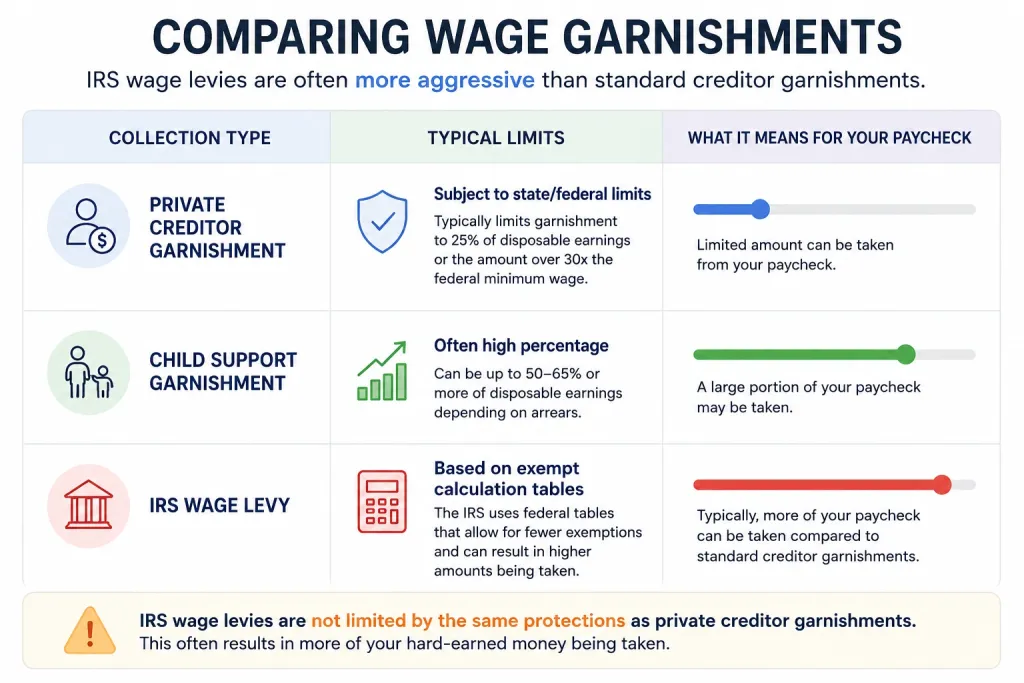
Because IRS levies use federal tax exemption formulas, some taxpayers experience far larger reductions than expected.
Why Is There a Tax Levy on My Paycheck?
If you are asking why is there a tax levy on my paycheck, the IRS likely believes collection efforts were unsuccessful.
Common triggers include:
Unpaid Federal Tax Debt
Back taxes from prior years are the most common reason.
This may involve:
- Unfiled returns
- Self-employment taxes
- Payroll taxes
- Underpayment issues
- Audit assessments
Ignored IRS Notices
Failing to respond to IRS letters is one of the fastest ways collection enforcement escalates.
Many taxpayers mistakenly assume notices are warnings without immediate consequences.
Defaulted Installment Agreements
If an IRS payment plan defaults because of missed payments or new tax debt, collection activity can restart.
This may include:
When Will the IRS Start Garnishing Wages After a Final Notice?
Many taxpayers ask when will the IRS start garnishing wages after receiving the final levy notice.
The IRS can generally begin wage garnishment:
- 30 days after the Final Notice of Intent to Levy
- If no appeal or resolution occurs
- If no approved payment agreement exists
However, timing can vary depending on:
- Employer payroll processing
- IRS workload
- Whether representation intervenes quickly
Tax resolution professional Jamie Roman often advises taxpayers not to wait until garnishment begins because earlier intervention usually creates more options.
How to Stop an IRS Wage Garnishment
IRS wage garnishments can sometimes be stopped or reduced.
Installment Agreements
A structured monthly payment plan may stop active collection enforcement.
The IRS may agree to:
- Release the levy
- Prevent future garnishments
- Allow gradual repayment
Offer in Compromise
Some taxpayers may qualify to settle tax debt for less than the full balance owed.
Eligibility depends on:
- Income
- Assets
- Expenses
- Collection potential
Currently Not Collectible Status
Taxpayers facing severe hardship may qualify for temporary collection suspension.
This may apply if garnishment prevents payment of:
- Housing
- Food
- Medical care
- Basic living expenses
Levy Release Requests
An experienced tax attorney may request an immediate levy release under certain conditions.
Possible arguments include:
- Economic hardship
- Incorrect assessment
- Expired collection statute
- Procedural errors
Why Working With a Tax Attorney Matters
IRS wage garnishment cases can escalate quickly.
At Tax Law Advocates, Yongho David Cho and Jamie Roman help taxpayers:
- Analyze IRS notices
- Stop wage levies
- Negotiate payment plans
- Request hardship relief
- Pursue Offer in Compromise settlements
- Protect long-term financial stability
Professional representation can often reduce mistakes, delays, and unnecessary financial damage.
Frequently Asked Questions
When does IRS start garnishing wages?
The IRS generally starts garnishing wages after sending multiple notices and issuing a Final Notice of Intent to Levy. The agency usually must wait at least 30 days after the final notice before beginning wage garnishment.
How long before IRS garnishes wages?
The timeline varies, but many wage garnishments occur several months after the first unpaid tax notice if no resolution is reached.
Can the IRS take your whole paycheck?
The IRS usually cannot legally leave you with zero income, but it may take a substantial portion of your paycheck beyond the exempt amount allowed under federal rules.
Can the IRS take your entire paycheck permanently?
IRS wage levies continue until the debt is resolved, released, or collection rights expire. The levy is not always permanent, but it can continue for extended periods without intervention.
Why is there a tax levy on my paycheck?
A tax levy on your paycheck usually means the IRS believes unpaid taxes remain unresolved after notices and collection attempts.
When will the IRS start garnishing wages after a final notice?
The IRS can generally begin garnishment 30 days after issuing the Final Notice of Intent to Levy if no payment arrangement or appeal is filed.
Conclusion
IRS wage garnishment can create serious financial stress, but taxpayers still have rights and options. Understanding when the IRS starts garnishing wages, how long before IRS garnishes wages, and whether the IRS can take your entire paycheck is critical to responding quickly and effectively.
Ignoring IRS notices often increases the risk of enforcement. Early action may help stop garnishments before they begin.
The team at Tax Law Advocates, including Yongho David Cho and Jamie Roman, helps taxpayers evaluate IRS collection risks and pursue solutions designed to protect income and financial stability.