




State Tax Levy
That Stops State Collection Action and Protects Your Income and Assets
Discover how much tax debt forgiveness you qualify for.
What Is a State Levy?
A state tax levy is a legal action a state tax agency takes to seize a taxpayer’s assets, such as wages, bank accounts, or property, to satisfy unpaid state tax debt. It’s a separate process from federal IRS collection, though the two can happen at the same time if you owe both, sometimes alongside a federal bank levy or wage garnishment. States generally issue a levy only after sending prior notices and giving the taxpayer an opportunity to respond. Tax Law Advocates can help you assess your situation and work toward stopping the levy.
Why Do I Have a State Tax Levy?
A state tax levy typically results from unpaid state tax debt that went unaddressed after multiple prior notices, an unfiled return that led to an estimated assessment, or a payment plan with the state that lapsed or defaulted. States are generally required to attempt to notify you before levying, though the notices can be easy to miss or misunderstand. If a levy caught you by surprise, it’s worth reviewing your state tax account alongside any unpaid taxes you may owe federally. Tax Law Advocates can help you trace the levy back to its source.
State Levy on Paycheck
A state levy on a paycheck, often called wage garnishment, allows the state to collect a portion of your wages directly from your employer until the tax debt is satisfied. States typically follow specific rules about how much of your paycheck can be taken, though these limits vary and can still leave a real financial strain on your household budget. Employers are legally required to comply once notified, so a wage levy usually can’t simply be ignored. Tax Law Advocates can help you respond quickly, similar to how we handle federal wage garnishment cases.
State Tax Levy Without Notice
While most states are required to send notice before initiating a levy, taxpayers sometimes feel blindsided because the notice went to an old address, was overlooked among other mail, or wasn’t clearly understood as a final warning. It’s less common, but not impossible, for a levy to move forward with minimal apparent warning if prior notices were sent and unanswered over time. If a levy has hit and you genuinely never received notice, that may affect your options for appeal, similar to disputing an improperly delivered CP90 notice at the federal level. Tax Law Advocates can help you review whether proper notice was given.
State Tax Levy Garnishment
Garnishment is the specific mechanism states use to carry out a levy against wages, meaning the state directs your employer to withhold a portion of your pay and send it directly to the state tax agency. This continues until the debt is paid in full or an alternative arrangement, such as a payment plan, is approved and the levy is released. Because garnishment reduces your take-home pay with every paycheck, it can create real financial hardship. Tax Law Advocates can help you pursue a release of garnishment and set up a more sustainable installment agreement to resolve the underlying debt.
Why Is There a State Tax Levy on My Paycheck?
A state tax levy on your paycheck almost always means the state has attempted other collection methods first and moved to garnishment after those attempts didn’t resolve the debt. It typically follows unpaid state income tax, unfiled returns that led to an estimated balance, or a lapsed agreement with the state. Seeing an unexpected reduction in your paycheck can be alarming, but it’s important to act rather than wait. Tax Law Advocates can help you understand why this happened and pursue a resolution.
What State Tax Levy Relief Options Are Available to Me?
Several resolution paths are available depending on your state, the type of levy, and your financial situation.
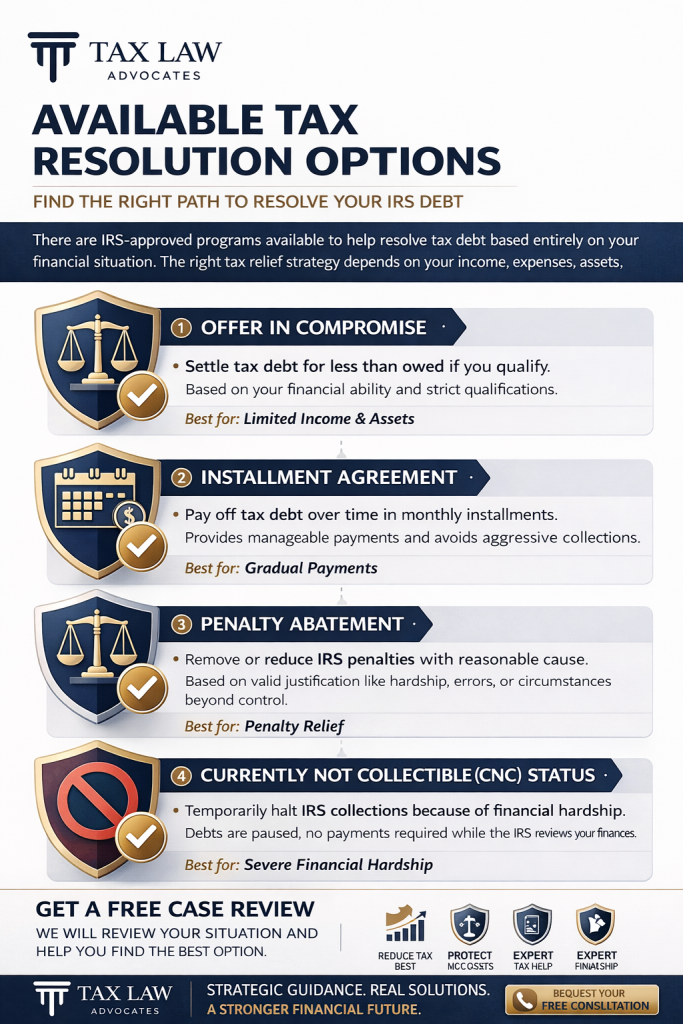
A Levy Release can be requested on the basis of financial hardship, procedural errors in the levy process, or an active resolution agreement being in place. An Installment Agreement with the state tax agency allows you to repay the outstanding balance over time while stopping further collection action. An Offer in Compromise may be available in certain states, allowing you to settle the debt for less than the full amount owed based on your financial situation. Currently Not Collectible status may also be available in some states if your financial circumstances make any payment impossible at this time.
State Tax Levy on Bank Account
A bank levy allows the state to freeze and withdraw funds directly from your bank account to satisfy unpaid tax debt, often without further warning once the levy is executed. Unlike wage garnishment, which takes a portion of ongoing income, a bank levy can claim the available balance in your account at the time it’s processed. Some states allow a limited window to contest or negotiate before funds are released to the state, similar in urgency to an IRS bank levy. If your bank account has been levied, Tax Law Advocates can help you act quickly.
How to Stop State Tax Levy on Wages?
Stopping a wage levy generally requires resolving the underlying tax debt or the state’s reason for enforcing collection, whether that means paying the balance, setting up an approved payment plan, or demonstrating financial hardship similar to what’s evaluated under an IRS Hardship Program at the federal level. Because the levy continues automatically until it’s released, it’s important to address it directly with the state agency. Tax Law Advocates can help you pursue the right path to get a wage levy released.
How to Stop a State Tax Levy?
Stopping a state tax levy, whether on wages, a bank account, or other assets, typically involves either satisfying the debt, negotiating an alternative resolution like a payment plan, or demonstrating that the levy should be released due to hardship or error. The specific process and options depend on the state involved. Acting quickly matters, since a levy continues to affect your finances every day it remains active. Tax Law Advocates can help you identify the most effective way to stop your specific levy — contact us to get started.
Who Do I Call About a Tax Levy?
If you’re facing a state tax levy, the notice you received should include contact information for the state tax agency that issued it, which is the appropriate starting point for questions about your specific balance. However, many taxpayers find it valuable to have knowledgeable representation handle these calls, since state tax agencies aren’t always working in the taxpayer’s favor. If you’re unsure who to contact, Tax Law Advocates can communicate directly with the state on your behalf.
Can the State Government Levy Taxes?
Yes, state governments have their own independent authority to levy taxes and to enforce collection of unpaid state tax debt, separate from the IRS’s authority at the federal level. This means you can owe and be levied by a state even if your federal taxes are fully paid and in good standing, and vice versa. Each state sets its own tax laws, notice requirements, and collection procedures. Tax Law Advocates can help you navigate both state and federal tax issues, including any related unpaid taxes, if you’re facing either.
What Are Top Tax Levies?
This phrase is often used loosely to ask about the most common or most serious types of tax levies taxpayers face, which generally include wage garnishment, bank account levies, and, in some cases, levies against other property or assets. Each type of levy affects your finances differently: a wage levy reduces ongoing income, while a bank levy can claim funds all at once. Understanding which type of levy you’re dealing with shapes what your options for resolution look like. Tax Law Advocates can help you understand your specific levy and pursue tax relief.
How to Apply for State Tax Levy Relief in 2026?
Getting a state tax levy released requires immediate and organized action. You will need to:
- Identify the specific state tax agency that issued the levy and the type of levy in place
- Gather complete financial records to support a hardship or resolution claim
- File all outstanding state tax returns to establish compliance
- Submit a formal levy release request or resolution application to the state agency
Time is critical with state tax levies. The sooner you engage professional representation, the better your chances of minimizing financial damage and getting the levy released quickly.
Why Work With a Tax Attorney for State Tax Levy Relief?
State tax levies require immediate legal action and a deep understanding of how individual state tax agencies operate. Working with a tax attorney gives you:
- Immediate intervention to halt active levies and protect your income
- Legal representation in all communications with the state tax authority
- Strategic negotiation for levy release and long term resolution
- Full compliance support including all outstanding state tax returns
Tax Law Advocates has experience dealing with state tax agencies across the country. We move fast, we know the process, and we fight to get your levy released and your financial situation stabilized as quickly as possible.
Why Tax Law Advocates
Tax Attorney: David Cho
Real Client
Scenarios
One client came to us facing wage garnishment while struggling to cover basic living expenses. After reviewing their financials, we positioned their case for hardship status, stopping collections.
Another client believed they had no options. By restructuring their financial presentation, we demonstrated eligibility for relief and prevented enforcement actions.
In a third case, we combined immediate protection with a long-term resolution plan, giving the client both relief and stability.
Meet Your Lead Tax Attorney and Enrolled Agent for IRS Debt Relief & Tax Resolution You Can Trust
David Cho
David Cho
Scott Mullerleile
EA with 12+ years in tax resolution and a background in collections. Scott has successfully handled hundreds of cases, including accepted Offers in Compromise and representation before Revenue Officers, audits, and appeals.
Our IRS Tax Relief Results by the Numbers
Proven results helping clients resolve IRS and state tax debt nationwide.
$0M+
Tax Debt Resolved for Clients
0K+
Clients served
0%
Handled by Tax Attorneys
0%
Cases Successfully Resolved
24hr
Average Case Action Time
0
Years of experience
Tax Law Advocates Client Success Stories
Jonnel Bolotano with Tax Law Advocates was amazing to work with. Even though I didn’t initially start my case with him, he stepped in, took charge, and stayed on top of everything from that point forward.
ItzMiBaebii
If I could give Tax Law Advocates more than 5 stars, I absolutely would. Jamie and Scott were my dream team, steady, sharp, and on top of every detail. I came in with a heavy tax burden that felt like it would follow me forever...
Rebecca Ingram
Jesse Moreno my tax lawyer did a wonderful job on my case. She was very patient kind and professional, and resolution that I received was better than I expected! Thank you Jesse for representing me!
Debbie Kern
FAQ
What are tax resolution services?
They are professional services that help resolve tax debt through negotiation and IRS programs.
Can tax resolution reduce my debt?
Yes, in some cases through programs like Offer in Compromise.
Do I qualify for tax relief?
It depends on your income, assets, and financial hardship.
How long does the process take?
It varies from weeks to several months depending on the case.
Will the IRS stop collections immediately?
In some cases, actions can be paused once representation begins.
Do I need a tax attorney?
It’s highly recommended for complex or high-value cases.
Can penalties be removed?
Yes, through penalty abatement if you qualify.
Is this available nationwide?
Yes, services are available in all 50 states.
What if I can’t pay anything?
You may qualify for hardship status.
Is the consultation free?
Yes, initial case reviews are free.
