
Wage Garnishment Attorney
Stop IRS Wage Garnishment Fast & Protect Your Income
$0M+


Discover how much tax debt forgiveness you qualify for.

How Can I Stop a Wage Garnishment Immediately
If the IRS or a creditor has started garnishing your paycheck, the first thing to understand is that there are legal paths to stop or reduce it, but the right one depends on who is garnishing you and why. For IRS wage levies, options can include requesting a Collection Due Process hearing, proving financial hardship through the IRS Hardship Program, or setting up an installment agreement, each with its own deadlines and paperwork. For court-ordered garnishments tied to private debt, options may include negotiating with the creditor, challenging the judgment, or reviewing exemption limits under your state’s law. Because timing matters and mistakes can be costly, it helps to have someone review your notices and pay stubs before you respond. Tax Law Advocates works with clients facing IRS and state tax levy garnishments to identify which relief options may realistically apply to their situation and explain what each one involves before any action is taken.
Why Clients Choose Us
Immediate protection. Real attorneys. Nationwide support. Proven IRS negotiation.
What Is Wage Garnishment?
Wage garnishment is a legal process that allows a creditor or government agency to collect an unpaid debt by requiring your employer to withhold a portion of your paycheck and send it directly to them. It’s typically a last resort, used after other collection attempts have failed, and it continues until the debt is paid or resolved. Most private creditors need a court judgment before they can garnish wages, while certain government debts, including unpaid federal taxes, child support, and student loans, can be collected through garnishment without a lawsuit, though notice requirements still apply. Federal and state law limit how much of your income can be taken, based on your pay and the type of debt involved. Understanding which category your situation falls into is the first step toward knowing what rights and options you have, which is where a firm experienced in tax-related garnishments like Tax Law Advocates can help clarify where you stand.
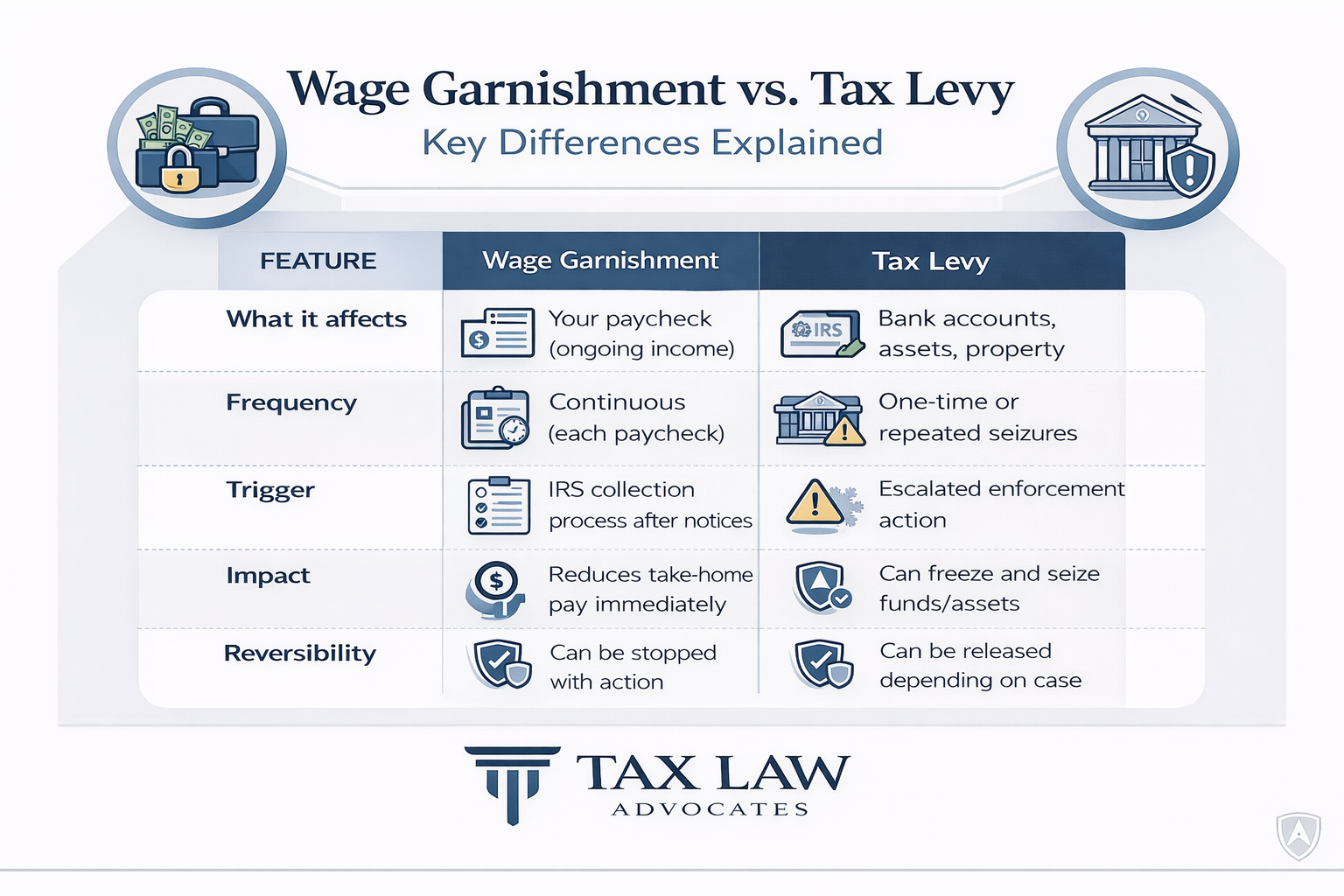
Wage Garnishment vs. Tax Levy
Key Differences Explained
When dealing with IRS collections, two of the most aggressive enforcement actions you may face are wage garnishment and a tax levy. While they are often confused, they impact your finances in very different ways, and understanding those differences can help you take the right action quickly.
A wage garnishment directly targets your income, reducing your paycheck every pay period. A tax levy, on the other hand, allows the IRS to seize assets such as bank accounts, property, or funds. Both are serious, but they require different strategies to resolve.
Why This Matters
A wage garnishment is technically a type of IRS levy, but it directly impacts your income every pay cycle. That’s why acting quickly is critical.
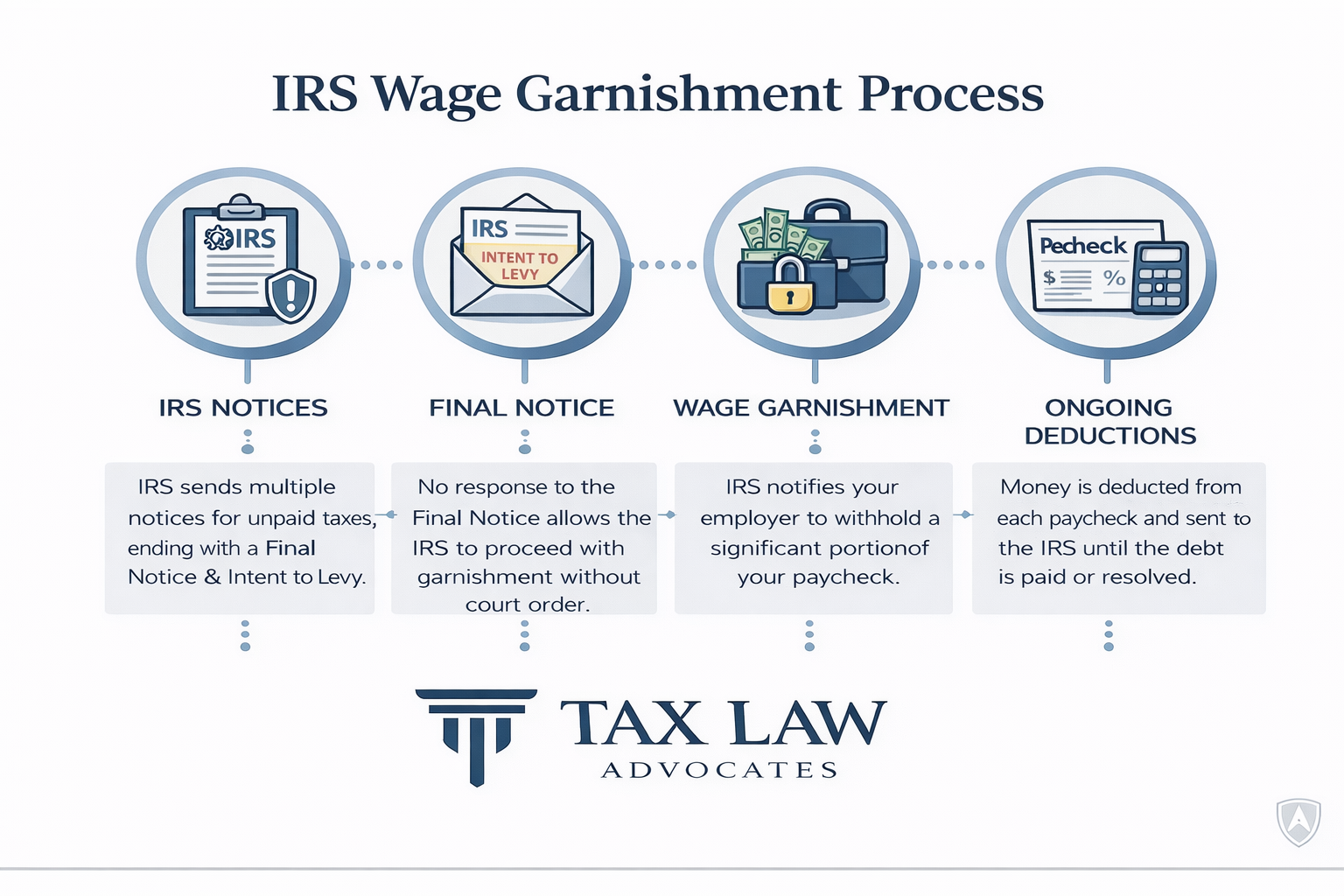
When Does the IRS Garnish Wages?
IRS Collection Timeline
IRS Notices → Final Notice (Intent to Levy) → No Response → Wage Garnishment Begins
How Tax Law Advocates Helps
We intervene at any stage—even after garnishment has started.
Our Process
Consultation → Strategy → IRS Negotiation → Resolution
We move quickly to protect your income and create a resolution plan tailored to your situation.
Who Can Garnish Wages Without Notice?
No creditor can legally garnish your wages with zero notice, but the amount of notice, and the process required to get there, varies significantly. Government entities such as the IRS, state tax agencies, federal student loan servicers, and child support enforcement offices have administrative authority to garnish wages without first suing you in court, though they’re still required to send written notice beforehand, such as the IRS’s notice of intent to levy. Private creditors, including credit card companies and medical debt collectors, must first win a court judgment against you and typically must notify you of that lawsuit and the resulting garnishment order. If a garnishment came as a surprise, it’s worth confirming which notices were actually sent and whether required steps were followed, something our team regularly helps clients trace back through when the issue involves unpaid taxes.
Why You Need a Wage Garnishment Attorney
IRS enforcement is a legal process. Having the right representation makes a measurable difference.
Legal Authority & Representation
Attorneys can represent you before the IRS, file appeals, and structure negotiations within federal law.
Protection From IRS Pressure
Once represented, the IRS communicates through your attorney—reducing stress and preventing mistakes.
Strategic Resolution Planning
Each case requires a tailored strategy based on your financial situation and IRS eligibility programs.
Can Credit Card Companies Garnish Your Wages?
Yes, a credit card company can garnish your wages, but only after suing you for the unpaid balance and obtaining a court judgment; they cannot do so simply because a payment was missed or an account went to collections. Once a judgment is entered, the creditor can request a wage garnishment order, and your employer will be legally required to withhold a portion of your pay, subject to federal and state limits designed to protect a minimum amount of your income. If you’ve been served with a lawsuit over credit card debt, responding by the deadline matters, since a default judgment makes garnishment much easier to obtain. While credit card debt itself falls outside tax law, many clients come to us after realizing multiple debts, including back taxes, are compounding at once; in those cases, understanding how each type of garnishment works helps prioritize which to address first.
Can a Collection Agency Garnish My Wages?
A collection agency can pursue wage garnishment, but like any private creditor, it must first file a lawsuit and win a judgment before it has the legal authority to do so; simply owning or servicing your debt isn’t enough. Once a judgment is secured, the agency can request a garnishment order through the court, and your employer becomes legally obligated to comply. If you’re being contacted by a collection agency and worried about garnishment, verifying that the debt is accurate and that any lawsuit was properly served are important early steps, since procedural errors can sometimes be challenged. When collection activity is tied to unpaid federal or state taxes rather than private debt, the process and your options look different, and that’s the area where our team focuses in helping clients understand what’s actually being pursued and why, drawing on tax resolution services built specifically for IRS and state matters.
How to Stop Wage Garnishment Immediately Online
Several steps toward stopping a wage garnishment can now be started online, which matters when time is limited. If the garnishment relates to unpaid federal taxes, you can view your balance and notices through the IRS’s online account and, depending on your situation, may be able to request a payment plan electronically. If it relates to a private debt, many state courts allow you to review case filings and deadlines online, though formally objecting or negotiating typically still requires direct communication with the creditor or court. Because online forms often come with strict deadlines and specific eligibility requirements, it’s easy to submit the wrong request or miss a window. Tax Law Advocates offers a case review process that starts online, allowing our team to look at your specific notices and garnishment details, whether tied to a CP504, LT11, or CP90 notice, before recommending next steps.
Can a Creditor Garnish My Wages After 7 Years?
This question often stems from confusion between two different “7-year rules.” Under the Fair Credit Reporting Act, most debts fall off your credit report after seven years, but that doesn’t erase the debt or your legal exposure to collection. Separately, each state sets its own statute of limitations on how long a creditor has to sue you for unpaid debt, and this period, often ranging from three to ten years depending on the state and debt type, can sometimes be restarted if you make a payment or acknowledge the debt in writing. The IRS operates on its own separate 10-year collection statute for unpaid federal taxes. If you’re unsure whether a debt, tax or otherwise, is still legally collectible, that’s worth confirming before assuming a garnishment can’t happen, and our team can help clarify where federal tax debts stand in that timeline.
How Do I Find Out Who Is Garnishing My Wages?
If you’ve noticed a deduction on your pay stub you don’t recognize, your employer’s payroll or HR department is required to provide you with a copy of the garnishment order, which will identify the creditor and the case or notice number behind it. For IRS-related garnishments, checking your IRS online account or requesting a transcript will show any outstanding balances and levy notices tied to your account. For court-ordered garnishments, the order itself will reference the court case, which you can look up through the county or state court system. Identifying the source quickly matters, since your response options and deadlines differ depending on whether you’re dealing with a private creditor, a state agency, or the IRS, and our team can help you interpret IRS notices specifically, including a CP14 or CP501/CP503 notice, if that’s what you’re facing.
Can Wages Be Garnished for Medical Bills?
Yes, unpaid medical bills are treated as unsecured consumer debt, and a hospital, provider, or the collection agency they sell the debt to can garnish your wages after winning a court judgment, the same as with credit card debt. Some states offer additional protections or lower garnishment caps specifically for medical debt, so it’s worth checking your state’s rules rather than assuming federal limits are the only ones that apply. Because medical debt often arrives unexpectedly and alongside other financial pressure, it’s common for it to surface around the same time as tax issues, particularly if income changed during a medical event. If back taxes are part of what you’re dealing with, our team can help you understand your back taxes help options there while you address other debts separately.
Can Unemployment Be Garnished?
Unemployment benefits are generally protected from garnishment by private creditors, including credit card companies and medical debt collectors, under both federal guidance and most state laws. However, this protection isn’t absolute: unemployment benefits can typically still be garnished for child support obligations, unpaid federal or state taxes, and overpayment of unemployment benefits themselves. If you’re currently receiving unemployment and concerned about a garnishment notice, confirming which category it falls into is important, since your options differ significantly between a tax-related garnishment and a private debt claim. Tax Law Advocates focuses specifically on helping individuals understand and respond to IRS and state tax levy collection actions, including how they may interact with unemployment income.
How to Check Wage Garnishment Balance?
To find out how much you still owe under an active wage garnishment, start with the source: your employer’s payroll department can tell you how much has been withheld and remitted so far, while the creditor, court, or agency that issued the order can confirm the remaining balance. For IRS wage levies specifically, your IRS online account or an official account transcript will show the current balance, including any penalties and interest that have accrued, which can change the total over time using the same IRS interest rate calculations that apply to any unpaid balance. Because garnished amounts don’t always update your loan or debt balance in real time, it’s worth reconciling these numbers periodically rather than assuming the garnishment alone is closing out the debt. If your garnishment is tax-related, our team can help you request and interpret an accurate IRS balance so you know exactly where things stand — contact us if your wages are currently being garnished.
Why Tax Law Advocates
Real Legal Experience That Matters
Our team consists of licensed tax attorneys who assess your case, act quickly, and communicate clearly throughout the process.
Nationwide Representation
We help clients across the U.S., providing fast access to experienced legal support regardless of location.
Transparent Process & Proven Results
We focus on realistic solutions, payment plans, hardship status, or settlements—without hidden fees or false promises.
Real Client Scenarios
Garnishment Stopped Quickly
A client came to us after their wages were already being garnished. Within days, we established representation and negotiated a payment plan that stopped the garnishment.
Financial Hardship Protection
We helped a client qualify for Currently Not Collectible status, stopping collections and giving them time to stabilize financially.
Long-Term Settlement Strategy
A business owner facing IRS enforcement worked with our attorneys to negotiate a settlement, reducing their total liability and lifting the garnishment.
Meet Your Lead Tax Attorney and Enrolled Agent for IRS Debt Relief & Tax Resolution You Can Trust

David Cho
David Cho
Scott Mullerleile
EA with 12+ years in tax resolution and a background in collections. Scott has successfully handled hundreds of cases, including accepted Offers in Compromise and representation before Revenue Officers, audits, and appeals.

Our IRS Tax Relief Results by the Numbers
Proven results helping clients resolve IRS and state tax debt nationwide.
$0M+
Tax Debt Resolved for Clients
0K+
Clients served
0%
Handled by Tax Attorneys
0%
Cases Successfully Resolved
24hr
Average Case Action Time
0
Years of experience
Tax Law Advocates Client Success Stories
Jonnel Bolotano with Tax Law Advocates was amazing to work with. Even though I didn’t initially start my case with him, he stepped in, took charge, and stayed on top of everything from that point forward.

ItzMiBaebii
If I could give Tax Law Advocates more than 5 stars, I absolutely would. Jamie and Scott were my dream team, steady, sharp, and on top of every detail. I came in with a heavy tax burden that felt like it would follow me forever...

Rebecca Ingram
Jesse Moreno my tax lawyer did a wonderful job on my case. She was very patient kind and professional, and resolution that I received was better than I expected! Thank you Jesse for representing me!

Debbie Kern
FAQ
What is an IRS wage garnishment?
It is when the IRS takes money directly from your paycheck to repay tax debt.
Can a wage garnishment be stopped?
Yes, with proper legal action, garnishments can often be stopped or reduced.
How quickly can an attorney help?
In many cases, action begins immediately after representation is established.
Do I need an attorney?
Not required, but attorneys significantly improve outcomes and protect your rights.
What triggers wage garnishment?
Unpaid taxes and ignored IRS notices typically lead to garnishment.
Can I negotiate with the IRS myself?
You can, but mistakes can delay or worsen your situation.
What is CNC status?
Currently Not Collectible status pauses IRS collections due to financial hardship.
Will my employer be notified?
Yes, employers are required to comply with IRS garnishment orders.
Does it affect my credit?
Not directly, but financial strain may have indirect effects.
Can I reduce the garnishment amount?
Yes, depending on your financial situation and resolution strategy.