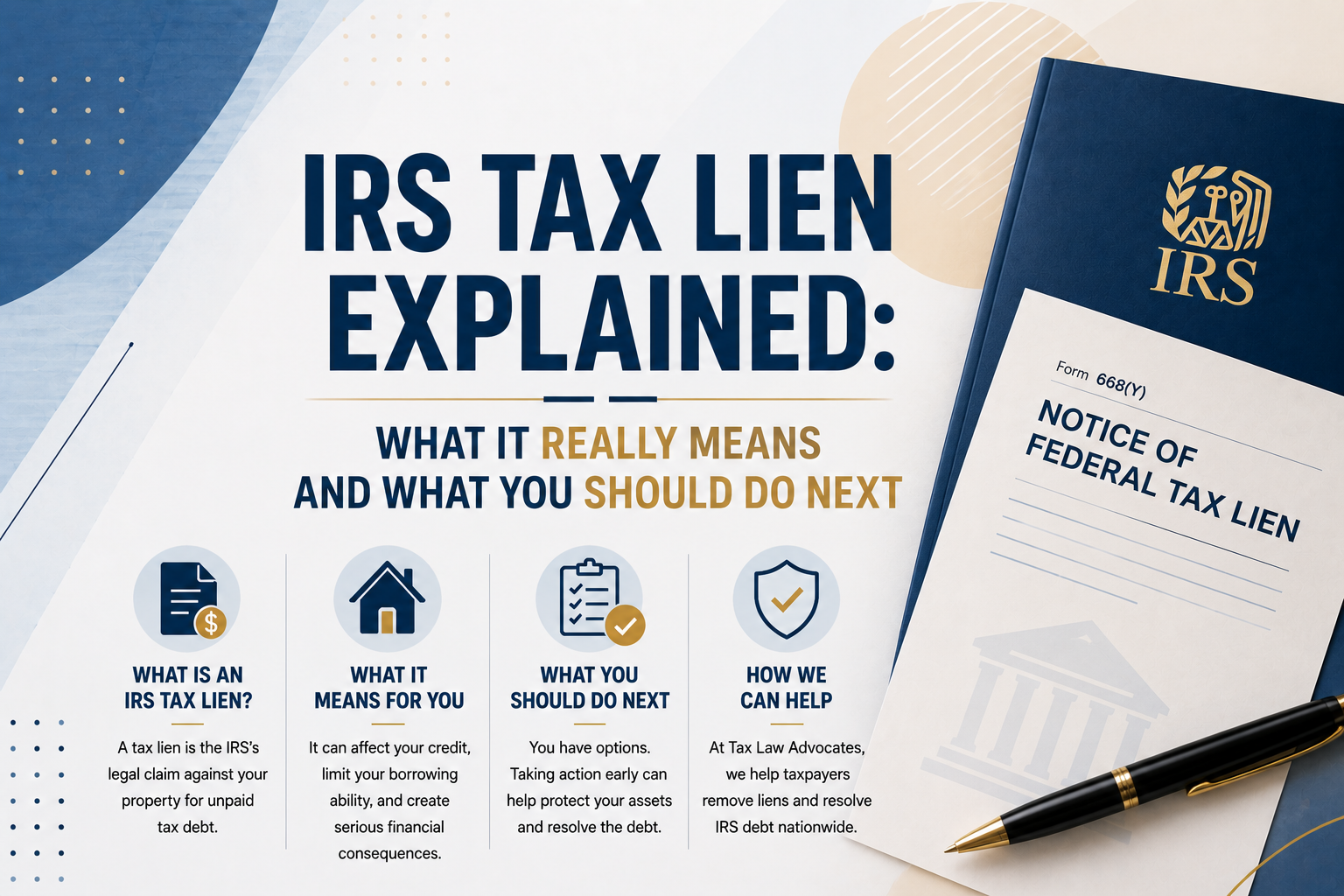
An IRS tax lien is one of the most frightening things a taxpayer can discover.
The moment people hear the words “federal tax lien,” panic immediately starts.
They begin searching online:
- “Does the IRS tax lien mean they take my house?”
- “Can I lose my property?”
- “Will this destroy my credit?”
- “Can the IRS seize my bank account next?”
- “How serious is an IRS tax lien?”
- “Can an IRS tax lien be removed?”
Across Reddit, TikTok, YouTube comments, Quora, and financial forums, taxpayers constantly share stories about fear, confusion, and sleepless nights after receiving a Notice of Federal Tax Lien.
Many people assume:
- the IRS is about to take everything,
- their financial life is ruined,
- or they are out of options completely.
Unfortunately, social media often spreads fear without properly explaining what an IRS tax lien actually means.
The reality is that an IRS tax lien is serious, but it does not automatically mean the IRS immediately seizes your home or empties your bank account.
At Tax Law Advocates, taxpayers often contact the firm after receiving IRS lien notices because they are overwhelmed emotionally and unsure what happens next. Professionals including David Cho and Jamie Roman help taxpayers understand how IRS tax liens actually work, what collection risks are real, and what legal options may exist before IRS enforcement becomes more aggressive.
This guide focuses specifically on the topic taxpayers are searching online every day:
IRS tax liens.
What Is an IRS Tax Lien?
An IRS tax lien is the government’s legal claim against a taxpayer’s property because of unpaid tax debt.
When taxpayers fail to:
- pay taxes,
- respond to IRS notices,
- or resolve balances,
the IRS may file a Notice of Federal Tax Lien to protect its financial interest.
Why the IRS Uses Tax Liens
The IRS uses tax liens to secure its position as a creditor.
The lien alerts creditors that the government has a legal interest connected to the taxpayer’s assets and property rights.
What Property Can an IRS Tax Lien Attach To?
An IRS tax lien may attach to:
- homes,
- vehicles,
- business property,
- bank accounts,
- investment interests,
- future assets,
- and financial rights.
This is why taxpayers become extremely frightened after receiving lien notices.
Does an IRS Tax Lien Mean the IRS Takes Your House?
This is one of the biggest misconceptions online.
The answer is:
No, an IRS tax lien does not automatically mean the IRS immediately takes your house.
What an IRS Tax Lien Actually Means
A tax lien primarily protects the government’s legal claim against property.
It does not automatically mean:
- immediate seizure,
- eviction,
- or forced property sale.
However, it is still serious because it may affect:
- refinancing,
- selling property,
- financial reputation,
- and borrowing opportunities.
Why Social Media Creates Panic About Tax Liens
Many viral tax videos make it sound like:
- the IRS instantly takes homes,
- taxpayers lose everything overnight,
- or liens automatically lead to seizure.
That is usually inaccurate.
IRS collection cases generally involve structured procedures and multiple stages before aggressive enforcement actions occur.
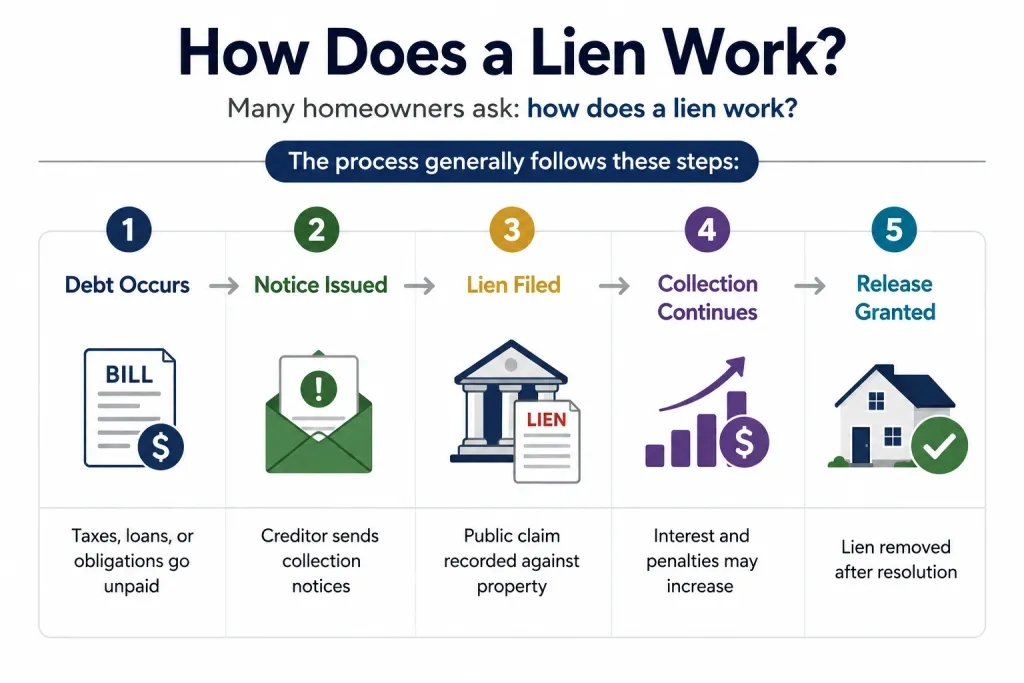
How the IRS Tax Lien Process Usually Happens
Most IRS tax lien situations do not happen suddenly.
Step 1: Unpaid Tax Debt Begins
Tax debt may result from:
- unpaid balances,
- unfiled returns,
- audits,
- payroll tax problems,
- or self-employment tax issues.
Penalties and interest often continue increasing over time.
Why Small Tax Problems Sometimes Become Large Ones
Many taxpayers delay action because they:
- feel overwhelmed,
- fear the IRS,
- or believe the problem may somehow disappear.
Unfortunately, delay usually increases financial pressure.
Step 2: IRS Collection Notices Are Sent
The IRS sends multiple notices requesting payment or communication.
Common IRS Mistake Taxpayers Make
One of the most common mistakes is ignoring IRS letters because of fear or anxiety.
At Tax Law Advocates, many taxpayers explain that they avoided opening IRS notices for months because the stress became emotionally overwhelming.
Step 3: Notice of Federal Tax Lien Is Filed
If collection efforts fail, the IRS may officially file a federal tax lien.
How an IRS Tax Lien Can Affect Your Financial Life
An IRS tax lien may create serious financial complications even when seizure is not immediately happening.
Problems Selling Property
Tax liens may complicate:
- home sales,
- real estate closings,
- or equity distribution.
Why Homeowners Become So Stressed
Many taxpayers fear they may lose financial flexibility or become trapped in difficult financial situations.
Mortgage and Refinancing Problems
Refinancing may become more difficult while a federal tax lien exists.
Why Lenders Pay Attention to Tax Liens
Tax liens signal unresolved tax debt and increased collection risk.
Business Financing Issues
Business owners may experience:
- financing obstacles,
- vendor concerns,
- or operational stress.
Why IRS Tax Liens Affect Business Reputation
Many business owners fear clients or partners discovering IRS collection issues.
H2 IRS Tax Lien vs IRS Levy: What’s the Difference?
This is one of the most misunderstood IRS collection topics online.
What an IRS Tax Lien Does
A lien creates a legal claim against property.
A Lien Does NOT Automatically Mean Seizure
This distinction is critical because many taxpayers confuse liens with immediate asset seizure.
What an IRS Levy Does
A levy involves actual collection action such as:
- bank levies,
- wage garnishments,
- or property seizure.
Why Taxpayers Confuse Liens and Levies
Social media creators frequently use the terms interchangeably even though they are legally different collection actions.
Can an IRS Tax Lien Be Removed?
This is one of the most emotionally important questions taxpayers ask.
In some situations, taxpayers may pursue:
- lien release,
- lien withdrawal,
- lien subordination,
- or collection resolution strategies.
However, eligibility depends heavily on:
- compliance,
- financial condition,
- payment status,
- and IRS review.
Why Compliance Matters for IRS Tax Lien Resolution
Many taxpayers incorrectly believe they can ignore:
- tax filings,
- notices,
- or payment obligations
while still expecting lien relief.
Compliance is usually critical for many IRS resolution options.
Why the IRS Focuses on Compliance
The IRS generally wants:
- communication,
- accurate filings,
- and structured resolution efforts.
Why Taxpayers Wait Too Long After Receiving a Tax Lien
Fear creates emotional paralysis.
Many taxpayers:
- panic,
- avoid communication,
- or hope the problem disappears.
Unfortunately, delay often increases:
- penalties,
- interest,
- collection pressure,
- and emotional exhaustion.
What Taxpayers Commonly Regret
Many taxpayers later say:
- “I should have dealt with this earlier.”
- “I waited because I was scared.”
- “I thought the IRS would go away.”
According to Yongho (David) Cho, delay often reduces flexibility for taxpayers facing serious IRS collection situations.
Why Early Action Matters
Earlier action may provide:
- more negotiation opportunities,
- more payment flexibility,
- and lower collection pressure.
Can IRS Tax Relief Help With Tax Liens?
Depending on the situation, IRS tax relief strategies may help taxpayers pursue:
- payment arrangements,
- collection alternatives,
- hardship review,
- or structured resolution plans.
However, no universal solution exists for every taxpayer.
Each case depends on:
- assets,
- income,
- compliance,
- liabilities,
- and IRS procedures.
H3 Why Financial Review Matters
IRS tax lien cases often require:
- detailed financial analysis,
- documentation review,
- and strategic planning.
Why Generic Internet Advice Is Dangerous
What works for one taxpayer may not work for another because every IRS case involves different financial circumstances.
How Tax Law Advocates Helps Taxpayers Understand IRS Tax Liens
At Tax Law Advocates, taxpayers work with professionals who help explain:
- collection risks,
- IRS procedures,
- compliance requirements,
- and possible resolution paths.
David Cho works on IRS collection and tax resolution matters involving:
- tax liens,
- levies,
- compliance problems,
- and collection negotiations.
Meanwhile, Jamie Roman helps coordinate documentation and communication throughout the resolution process.
H3 Why Communication and Organization Matter
IRS collection matters often involve:
- notices,
- financial records,
- deadlines,
- and ongoing documentation.
Why Taxpayers Feel Overwhelmed
Many taxpayers feel emotionally exhausted because IRS cases can become confusing and stressful very quickly.
The Biggest IRS Tax Lien Myth Online
The biggest myth online is:
“If the IRS files a lien, they are taking your house immediately.”
That is usually false.
An IRS tax lien is serious, but it is not the same as immediate property seizure.
Understanding this difference may help taxpayers replace panic with informed decision-making.
What You Should Do After Receiving an IRS Tax Lien
Open and Review Every IRS Notice
Ignoring notices usually increases stress and confusion.
Why Understanding the Situation Matters
Many taxpayers panic before fully understanding:
- the balance,
- collection stage,
- or available options.
Determine Whether Tax Returns Are Missing
Unfiled returns often create major complications.
H4 Why Missing Returns Increase IRS Pressure
Unfiled returns may reduce access to certain IRS resolution programs.
Explore Resolution Options Early
Earlier action may help reduce escalation risks.
Why Waiting Usually Makes Things Worse
Delay often increases:
- penalties,
- interest,
- and collection intensity.
Final Thoughts on IRS Tax Liens
An IRS tax lien is serious because it represents the government’s legal claim connected to unpaid tax debt.
But fear and misinformation online often make IRS tax liens appear even more catastrophic than they actually are.
A tax lien does not automatically mean:
- the IRS immediately takes your house,
- seizure happens tomorrow,
- or financial life is over.
At Tax Law Advocates, professionals including Yongho (David) Cho and Jamie Roman help taxpayers understand realistic IRS collection risks and possible resolution strategies before situations become more difficult financially and emotionally.
The most important thing taxpayers can do is replace panic with education and take action before IRS collection pressure escalates further.
Frequently Asked Questions
What is an IRS tax lien?
An IRS tax lien is the government’s legal claim against property because of unpaid tax debt.
Does an IRS tax lien mean the IRS takes my house?
No. A lien does not automatically mean immediate property seizure.
What is the difference between an IRS lien and levy?
A lien is a legal claim against property, while a levy involves actual seizure actions such as garnishments or bank levies.
Can an IRS tax lien affect selling my home?
Yes. Tax liens may complicate property sales and refinancing transactions.
Can an IRS tax lien be removed?
Depending on eligibility and compliance, taxpayers may pursue certain lien-related resolution options.
What does David Cho do at Tax Law Advocates?
Yongho (David) Cho works on IRS collection and tax resolution matters involving liens, negotiations, and compliance strategies.
What does Jamie Roman do at Tax Law Advocates?
Jamie Roman helps coordinate communication and documentation management throughout IRS resolution cases.