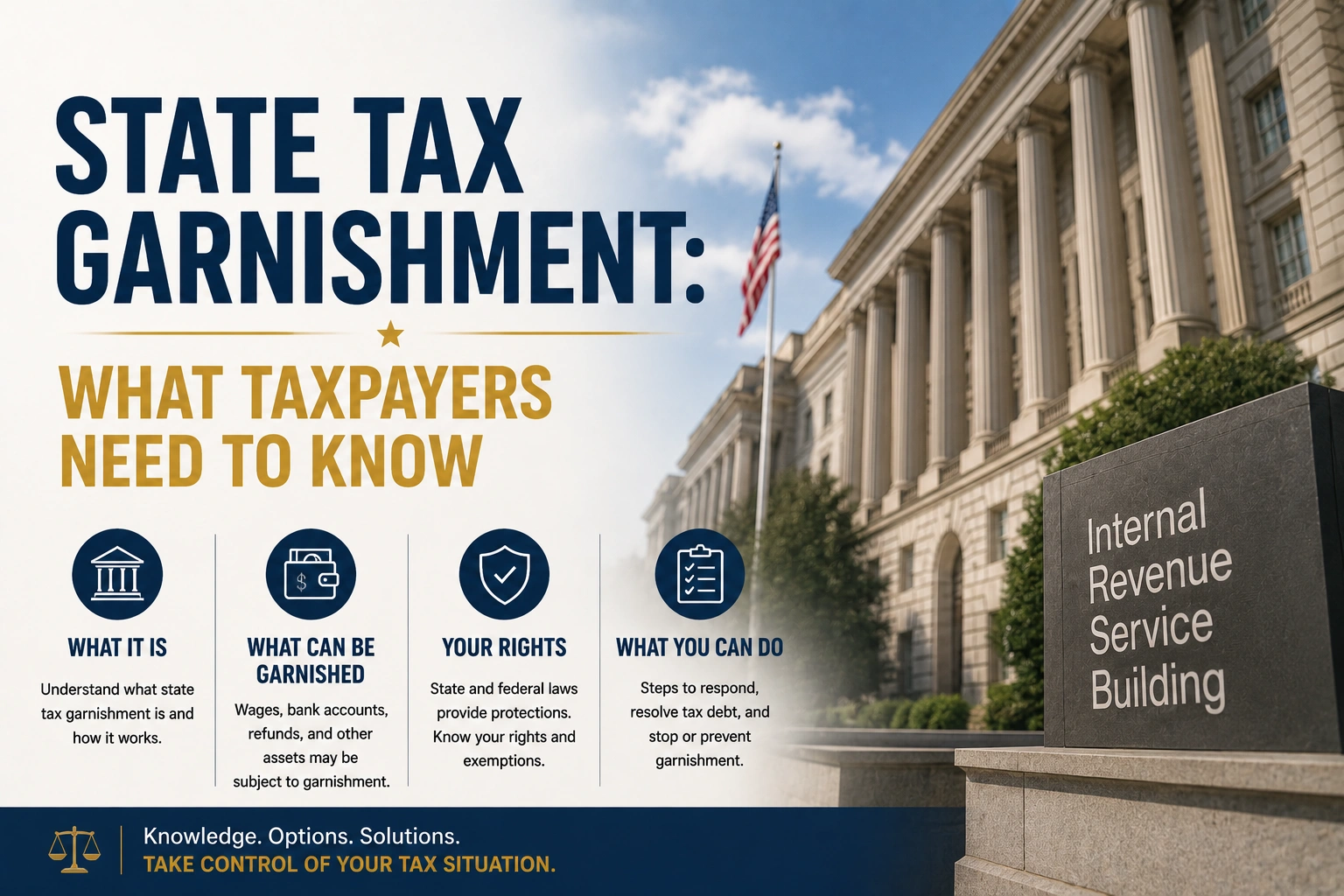
State tax garnishment can create immediate financial pressure for both individuals and business owners. State tax agencies may garnish wages, levy bank accounts, intercept tax refunds, and place liens on property when taxpayers fail to resolve unpaid state tax debts. Many taxpayers are surprised to learn how quickly these collection actions can begin.
Whether you are facing a state levy on paycheck income, a tax refund garnishment, or questions about levies and garnishments, understanding how these collection tools work is critical. In many cases, taxpayers still have legal options available before enforcement actions escalate.
At Tax Law Advocates, tax attorney Yongho David Cho and tax resolution professional Jamie Roman help taxpayers evaluate wage garnishment issues, tax levies, IRS collection risks, and state tax enforcement matters nationwide.
What Is State Tax Garnishment?
State tax garnishment is a legal collection action used by state tax agencies to recover unpaid tax balances. Depending on state law, collection agencies may garnish wages, seize tax refunds, freeze bank accounts, or place liens against property.
Common forms of tax garnishment include:
- Wage garnishment
- State levy garnishment
- Tax refund garnishment
- Bank levies
- Property liens
- Business receivable levies
Many taxpayers confuse levy lien garnishment actions because these collection tools are related but legally different.
Tax Levy vs Garnishment vs Lien
Understanding the difference between these terms is important.
Tax Lien – A legal claim against your property that can damage your financial standing and creditworthiness.
Tax Levy – The actual seizure of assets by the taxing authority, which can result in the loss of funds or property.
Wage Garnishment – An ongoing deduction from your paycheck that reduces future wages until the tax debt is resolved.
A tax levy garnishment may involve both a lien and a wage levy depending on the stage of collections.
How State Wage Garnishment Works
A state levy on paycheck income allows a state agency to require an employer to withhold a portion of an employee’s wages and send those funds directly to the taxing authority.
The process often includes:
- Tax assessment
- Collection notices
- Final demand for payment
- Wage levy issuance
- Employer compliance
Unlike consumer debt lawsuits, many state tax agencies can garnish wages administratively without obtaining a separate court judgment.
What Is a Wage Levy?
A wage levy is a type of tax collection action where part of a taxpayer’s wages are continuously withheld.
Wage Levy vs Garnishment
Many taxpayers search for “wage levy vs garnishment” because the terms are closely connected.
Generally:
- A wage garnishment may apply to many types of debts
- A wage levy specifically refers to government tax collection
Tax authorities may continue a wage levy until:
- The debt is paid
- A resolution agreement is approved
- Collection statutes expire
- Financial hardship is proven
Can Federal Taxes Be Garnished?
Many taxpayers ask: “Can federal taxes be garnished?”
The federal government itself generally does not “garnish” federal taxes. Instead, the IRS may:
- Levy wages
- Seize bank accounts
- Intercept refunds
- File federal tax liens
However, federal tax refunds themselves may be garnished or intercepted through programs like the Treasury Offset Program.
Can My Federal Tax Refund Be Garnished?
Yes. Tax refunds may be intercepted for several types of debts.
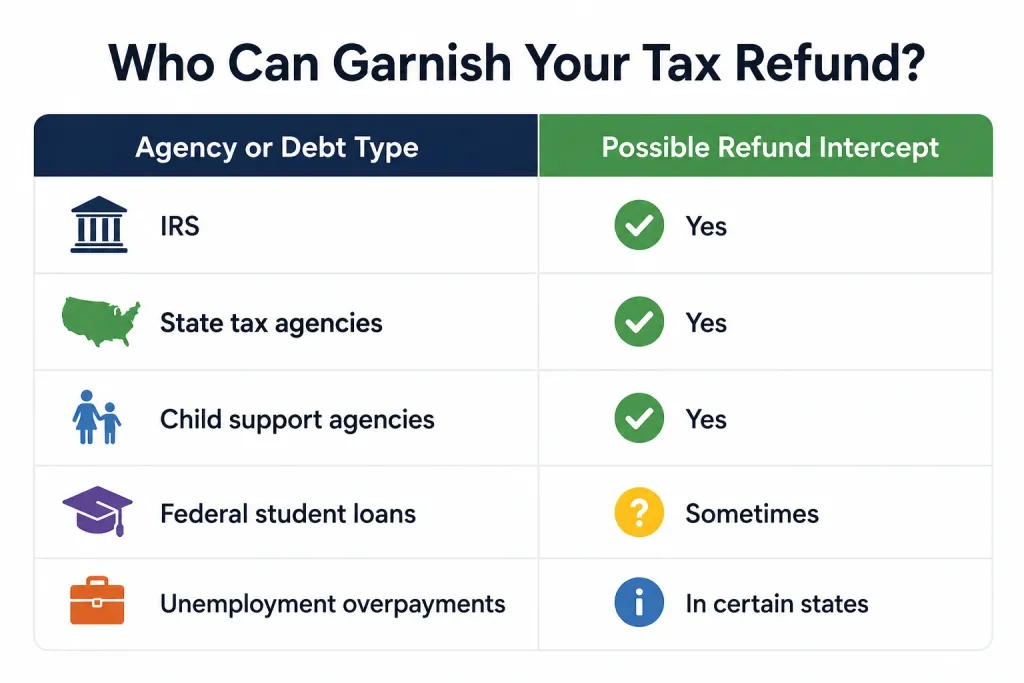
This is commonly referred to as garnishment of tax return funds or tax refund garnishment.
Can Wage Garnishment Take Tax Refund?
Wage garnishment and tax refund garnishment are usually separate collection processes.
A taxpayer may experience:
- Ongoing paycheck garnishment
- State levy garnishment
- Simultaneous tax refund seizure
In some situations, both state and federal refunds may be intercepted while wage levies continue.
Income Tax Garnishment and State Collection Powers
Income tax garnishment can affect:
- Employees
- Independent contractors
- Business owners
- Self-employed taxpayers
Some states possess aggressive collection powers, including:
- License suspension
- Bank levies
- Asset seizures
- Property liens
- Vendor payment levies
The severity often depends on:
- Balance owed
- Compliance history
- Unfiled returns
- Prior enforcement actions
What Triggers State Tax Garnishment?
Several factors commonly lead to garnishment actions.
Unpaid State Tax Debt
Failure to resolve unpaid balances can escalate collections.
Ignored Tax Notices
Many taxpayers overlook early collection letters before garnishment begins.
Unfiled Tax Returns
States often become more aggressive when required returns remain unfiled.
Broken Payment Agreements
Missed installment payments frequently restart enforcement activity.
How Much Can Be Taken Through Wage Garnishment?
The amount depends on:
- State law
- Income level
- Filing status
- Existing garnishments
- Type of tax debt
Some states follow federal Consumer Credit Protection Act limits, while tax agencies may have broader authority.
Taxpayers facing severe hardship may qualify for modified payment arrangements or temporary collection holds.
Can You Claim Wage Garnishment on Your Taxes?
Many taxpayers ask whether wage garnishment is deductible.
Can You Claim Wage Garnishment on Your Taxes?
In most situations:
- Personal wage garnishments are not tax deductible
- Child support garnishments are generally not deductible
- Tax levies are usually not deductible personal expenses
However, business-related garnishments or settlement expenses may involve different tax treatment depending on circumstances.
Because this area is highly fact-specific, taxpayers should consult a qualified tax professional before claiming deductions.
How to Stop State Tax Garnishment
Several legal options may help reduce or stop tax wage garnishment.
Installment Agreements
Monthly payment plans may stop ongoing levies.
Financial Hardship Requests
Taxpayers demonstrating hardship may qualify for temporary relief.
Offer in Compromise
Some taxpayers may settle tax debt for less than the full amount owed.
Innocent Spouse Relief
Certain spouses may avoid liability under qualifying conditions.
Appeal Rights
Many states allow administrative appeals after garnishment notices are issued.
At Tax Law Advocates, Yongho David Cho and Jamie Roman help taxpayers analyze available collection defense options based on their financial condition and compliance history.
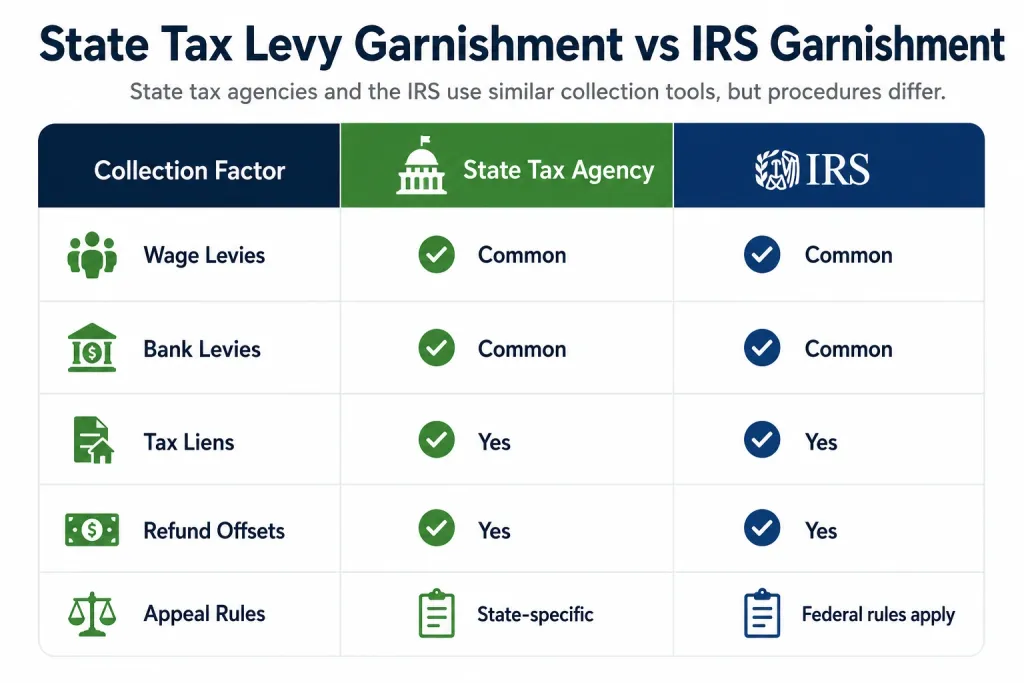
Because every state operates differently, taxpayers should review the rules applicable to their jurisdiction.
Warning Signs Before Garnishment Begins
Taxpayers should never ignore:
- Final notices
- Intent to levy letters
- Collection summons
- Wage withholding notices
- Bank levy warnings
- Employer garnishment notifications
Early intervention often creates more resolution options.
Why Early Tax Resolution Matters
Once wage levies begin, financial pressure can escalate quickly.
Consequences may include:
- Missed mortgage payments
- Payroll instability
- Credit pressure
- Frozen bank accounts
- Increased penalties and interest
Working proactively with qualified tax professionals may help reduce enforcement risks before collection activity intensifies.
Frequently Asked Questions About State Tax Garnishment
What is state tax garnishment?
State tax garnishment is a collection method used by state tax agencies to recover unpaid taxes through wage withholding, bank levies, or refund interception.
Can federal taxes be garnished?
Federal tax refunds may be intercepted for certain debts, while the IRS itself commonly uses tax levies rather than traditional garnishments.
Can my federal tax refund be garnished?
Yes. Refunds may be intercepted for tax debt, child support, student loans, or other qualifying obligations.
What is the difference between a levy and garnishment?
A levy involves actual seizure of assets, while garnishment usually refers to ongoing withholding of wages or payments.
How do I stop a state levy garnishment?
Possible options include installment agreements, hardship relief, appeals, or negotiated settlements depending on eligibility.
Can wage garnishment take tax refund money too?
Yes. Wage garnishment and tax refund interception can occur simultaneously in some situations.
Can you claim wage garnishment on your taxes?
Usually no for personal debts, though business-related situations may differ.
Who can garnish your tax refund?
The IRS, state agencies, child support agencies, and certain federal programs may intercept refunds.
What is a wage levy?
A wage levy is a government tax collection action requiring employers to send part of an employee’s wages directly to the taxing authority.
What should I do if my wages are being garnished for taxes?
Taxpayers should review notices immediately and evaluate pa