If you are dealing with IRS debt, one of the most stressful questions you may ask is: how long does a federal tax lien last? A federal tax lien can affect your credit, property, business operations, and financial future for years if left unresolved.
At Tax Law Advocates, tax professionals such as Yongho David Cho and Jamie Roman help taxpayers understand IRS collection timelines and explore legal resolution strategies before liens create long-term financial damage.
What Is a Federal Tax Lien?
A federal tax lien is the government’s legal claim against your property after you fail to pay a tax debt. The lien can attach to:
- Real estate
- Personal property
- Vehicles
- Business assets
- Bank accounts
- Future acquired property
The IRS may then file a Notice of Federal Tax Lien publicly to notify creditors that the government has a claim against your assets.
How Long Does a Federal Tax Lien Last?
In most situations, a federal tax lien lasts:
10 Years From the Date of Tax Assessment
The IRS generally has 10 years to collect unpaid taxes. This period is commonly known as the Collection Statute Expiration Date (CSED).
As long as the IRS collection period remains active, the federal tax lien typically remains valid as well.
How Long Do Federal Tax Liens Last if the IRS Extends the Collection Period?
Many taxpayers do not realize the 10-year collection period can sometimes be extended.
Bankruptcy Filings
When bankruptcy is filed, the IRS collection statute may temporarily stop running.
Offer in Compromise Applications
An IRS Offer in Compromise review can extend collection timelines while the application is pending.
Installment Agreement Negotiations
Some installment agreement situations may affect the collection statute timeline.
Living Outside the United States
Extended periods outside the country can also impact IRS collection timing.
How Long Is a Federal Tax Lien Valid?
A federal tax lien remains valid until one of the following occurs:
The Tax Debt Is Paid in Full
Once the balance is fully resolved, the IRS typically releases the lien within 30 days.
The Collection Statute Expires
If the IRS collection period ends, the lien usually becomes unenforceable.
The IRS Withdraws the Lien
In some cases, taxpayers may qualify for lien withdrawal programs.
The IRS Accepts a Settlement
An approved Offer in Compromise may result in lien release after settlement terms are completed.
How Long Does a Tax Lien Last on Your Property?
A federal tax lien can continue attaching to:
- Existing real estate
- Future property acquisitions
- Business equipment
- Financial accounts
Even if you sell property, the IRS may still claim proceeds from the sale unless arrangements are made beforehand.
Does a Federal Tax Lien Affect Credit?
Although major credit bureaus no longer commonly include federal tax liens on standard consumer credit reports, liens can still create serious financial consequences.
Common Financial Effects of a Tax Lien
- Difficulty obtaining loans
- Mortgage refinancing issues
- Problems selling property
- Damage to business financing opportunities
- Public record visibility
How Long Do Tax Liens Last if You Ignore Them?
Ignoring an IRS lien rarely makes the situation better.
Possible IRS Enforcement Actions
- Wage garnishments
- Bank levies
- Asset seizures
- Passport restrictions for large balances
This is why professionals like Yongho David Cho and Jamie Roman often recommend proactive action before enforcement intensifies.
Can You Remove a Federal Tax Lien Early?
Yes. Several IRS resolution options may help remove or release a lien before the collection period expires.
IRS Tax Lien vs IRS Tax Levy

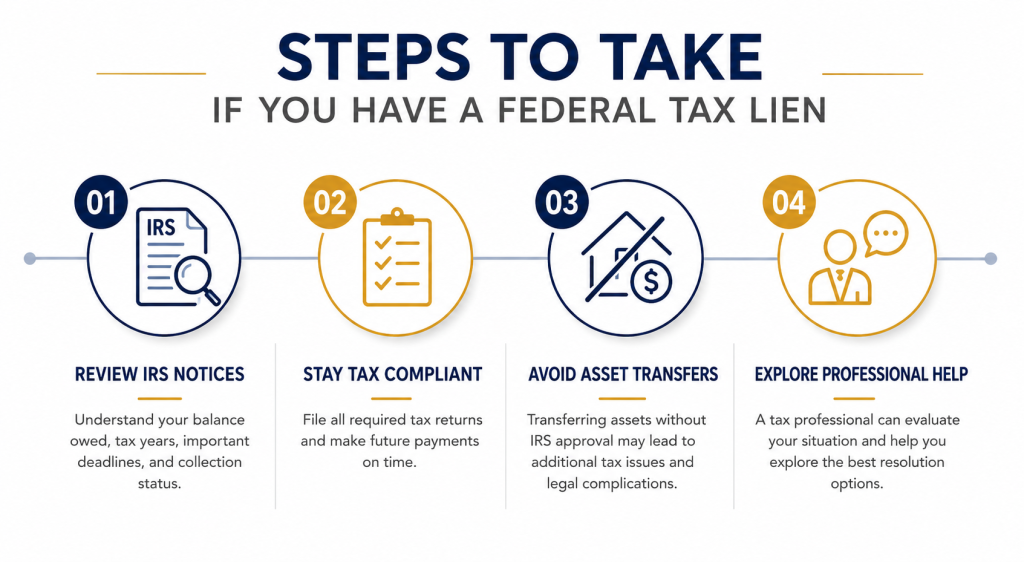
Steps to Take if You Have a Federal Tax Lien
Review Your IRS Notices Carefully
Understand:
- Total balance owed
- Tax years involved
- Deadlines
- Collection status
Stay Tax Compliant
Filing all required returns is often necessary before the IRS considers relief options.
Avoid Asset Transfers Without Guidance
Improper transfers may create additional legal complications.
Explore Professional Representation
Experienced tax professionals can evaluate:
- Statute expiration timelines
- Settlement eligibility
- Hardship status
- Lien withdrawal opportunities
Why Early Action Matters
The longer a federal tax lien remains unresolved, the greater the potential financial consequences.
Taxpayers who act early may have more options available, including:
- Lower monthly payments
- Penalty relief
- Settlement negotiations
- Collection holds
- Lien withdrawal requests
Frequently Asked Questions
How long does a federal tax lien last?
In most cases, a federal tax lien lasts until the IRS collection statute expires, which is generally 10 years from the date of tax assessment.
How long do federal tax liens last if I enter a payment plan?
The lien may remain active during an installment agreement until the balance is fully paid or the IRS agrees to withdraw the lien.
How long does a tax lien last after paying the IRS?
The IRS generally releases the lien within 30 days after full payment of the tax debt.
How long is a federal tax lien valid if I file bankruptcy?
Bankruptcy can temporarily pause the IRS collection statute, potentially extending how long the lien remains enforceable.
Can the IRS renew a federal tax lien?
In some situations, the IRS may refile a Notice of Federal Tax Lien if the collection statute remains active.
Does a federal tax lien go away automatically?
The lien may expire when the IRS collection statute ends, but taxpayers should confirm the status directly with the IRS or a qualified tax professional.
Speak With a Tax Resolution Professional
If you are facing an IRS lien and wondering how long does a federal tax lien last, understanding your options early can make a major difference.
The team at Tax Law Advocates, including Yongho David Cho and Jamie Roman, helps taxpayers evaluate IRS collection timelines, lien risks, and potential resolution strategies tailored to their financial situation.