
Does Taxes Affect Your Credit Score?
One of the most common questions taxpayers ask is: “Does taxes affect your credit score?”
In most situations, simply owing taxes to the IRS does not directly lower your credit score. The IRS generally does not report tax debt directly to the major credit bureaus.
However, certain tax-related issues may still indirectly affect your financial profile, lending opportunities, and overall creditworthiness.
Understanding how IRS debt, tax liens, and collections work is important for taxpayers facing financial challenges or unresolved tax liabilities.
At Tax Law Advocates, our tax attorneys and enrolled agents help taxpayers nationwide understand IRS collection procedures and available tax resolution options.
Does Owing the IRS Affect Your Credit Score?
Many taxpayers ask: “Does owing the IRS affect your credit score?”
Generally, unpaid tax debt alone does not automatically appear on a credit report. The IRS typically does not report balances directly to Equifax, Experian, or TransUnion.
However, owing significant tax debt may still create financial complications that can indirectly impact:
- Loan approvals
- Mortgage applications
- Financial background reviews
- Debt-to-income evaluations
- Overall financial standing
Additionally, unresolved tax issues may escalate into collection actions that can affect financial opportunities.
Does the IRS Report to Credit Bureaus?
Another common concern is: “Does the IRS report to credit bureaus?”
In most cases, the IRS does not directly report tax debt to the major credit reporting agencies.
The IRS is primarily focused on:
- Tax collection
- Compliance enforcement
- Payment arrangements
- Federal tax administration
However, taxpayers should understand that certain public records or financial consequences associated with tax debt may still affect lending decisions or financial reviews.
Does the IRS Report to Credit Agencies?
Taxpayers frequently search: “Does the IRS report to credit agencies?”
Currently, the IRS generally does not furnish routine tax debt information directly to consumer credit agencies.
That said, lenders may still review:
- Public records
- Tax transcripts
- Outstanding federal liabilities
- Payment history
- Financial disclosures
This is especially common during:
- Mortgage underwriting
- Business financing reviews
- Large loan applications
- Government contracting reviews
Does IRS Collections Go on Credit Report?
Many taxpayers worry about IRS collections appearing on their credit file.
The answer to “Does IRS collections go on credit report?” is more nuanced.
While IRS balances themselves are generally not directly listed on standard consumer credit reports, collection activity may still create indirect financial consequences.
For example:
- Tax liens may become public records
- Wage garnishments may affect financial stability
- Bank levies may disrupt account activity
- Loan applications may require tax compliance verification
Financial institutions often evaluate overall financial risk beyond a traditional credit score alone.
Does a Tax Lien Affect Your Credit?
A federal tax lien is one of the more serious IRS collection tools.
Many taxpayers ask: “Does a tax lien affect your credit?”
Historically, tax liens could appear directly on consumer credit reports. However, major credit bureaus removed most federal tax liens from standard consumer reporting models in recent years due to reporting accuracy concerns.
Even so, tax liens may still:
- Appear in public records searches
- Affect lending reviews
- Raise concerns during underwriting
- Impact business financing opportunities
Tax liens can also create significant financial pressure by attaching to property rights and assets.
Does a Tax Lien Hurt Your Credit?
Another frequent question is: “Does a tax lien hurt your credit?”
While many consumer credit reports no longer display federal tax liens directly, lenders and financial institutions may still independently discover lien information during underwriting or public records searches.
As a result, unresolved tax liens may still negatively affect:
- Mortgage approvals
- Business loans
- Refinancing opportunities
- Creditworthiness evaluations
- Financial negotiations
The overall financial impact depends on the taxpayer’s situation, total debt exposure, and lender requirements.
Understanding a Tax Lien on Credit Report
Taxpayers often search for “tax lien on credit report” because they are concerned about how federal tax debt may appear during credit reviews.
Although federal tax liens may not appear on standard credit reports in the same way they once did, unresolved IRS issues may still surface during:
- Mortgage applications
- SBA loan reviews
- Commercial lending
- Asset-based financing
- Financial due diligence reviews
Tax compliance is often an important factor in major financial decisions.
What Happens If You Ignore IRS Tax Debt?
Ignoring IRS notices may increase the risk of:
- Wage garnishment
- Bank levies
- Federal tax liens
- Penalties and interest
- Passport restrictions
- Asset seizure actions
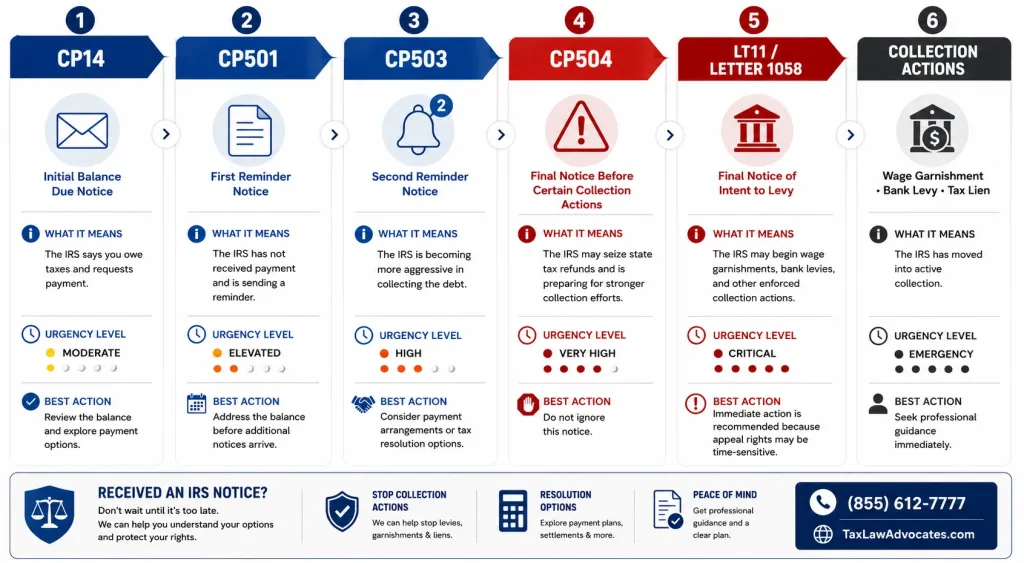
The IRS typically sends multiple notices before escalating collection activity.
Common notices may include:
Responding early often provides more resolution opportunities.
Tax Resolution Options That May Help
Depending on the taxpayer’s circumstances, available tax resolution options may include:
- IRS installment agreements
- Offer in Compromise
- Penalty abatement
- Currently Not Collectible hardship status
- Tax lien withdrawal requests
- Collection appeals
Every case is different, and eligibility depends on financial condition, filing compliance, and overall tax liability.
Tax Attorneys Can Help Evaluate IRS Collection Risks
Tax debt can create stress far beyond monthly payments.
IRS collection activity may affect:
- Financial planning
- Lending opportunities
- Business operations
- Employment-related financial reviews
- Personal financial stability
At Tax Law Advocates, our attorneys and enrolled agents help taxpayers understand collection risks, evaluate tax resolution strategies, and communicate directly with the IRS when appropriate.
Frequently Asked Questions
Does taxes affect your credit score?
Generally, owing taxes alone does not directly lower a credit score because the IRS typically does not report tax debt directly to major credit bureaus.
Does owing the IRS affect your credit score?
While unpaid IRS debt may not directly appear on a standard credit report, it may still affect lending decisions and overall financial evaluations.
Does the IRS report to credit bureaus?
The IRS generally does not directly report tax debt balances to Equifax, Experian, or TransUnion.
Does IRS collections go on credit report?
IRS balances themselves are generally not directly listed on consumer credit reports, though related financial issues may still impact lending reviews.
Does a tax lien affect your credit?
Although many federal tax liens no longer appear directly on standard credit reports, lenders may still identify liens through public records searches.
Does a tax lien hurt your credit?
Tax liens may still negatively affect financing opportunities, underwriting reviews, and overall financial risk assessments.
Speak With Experienced Tax Professionals
If you are dealing with:
- IRS tax debt
- Federal tax liens
- Wage garnishments
- IRS collection notices
- Bank levies
- Tax compliance concerns
The team at Tax Law Advocates can help review your situation and explain available tax resolution options based on your financial circumstances.