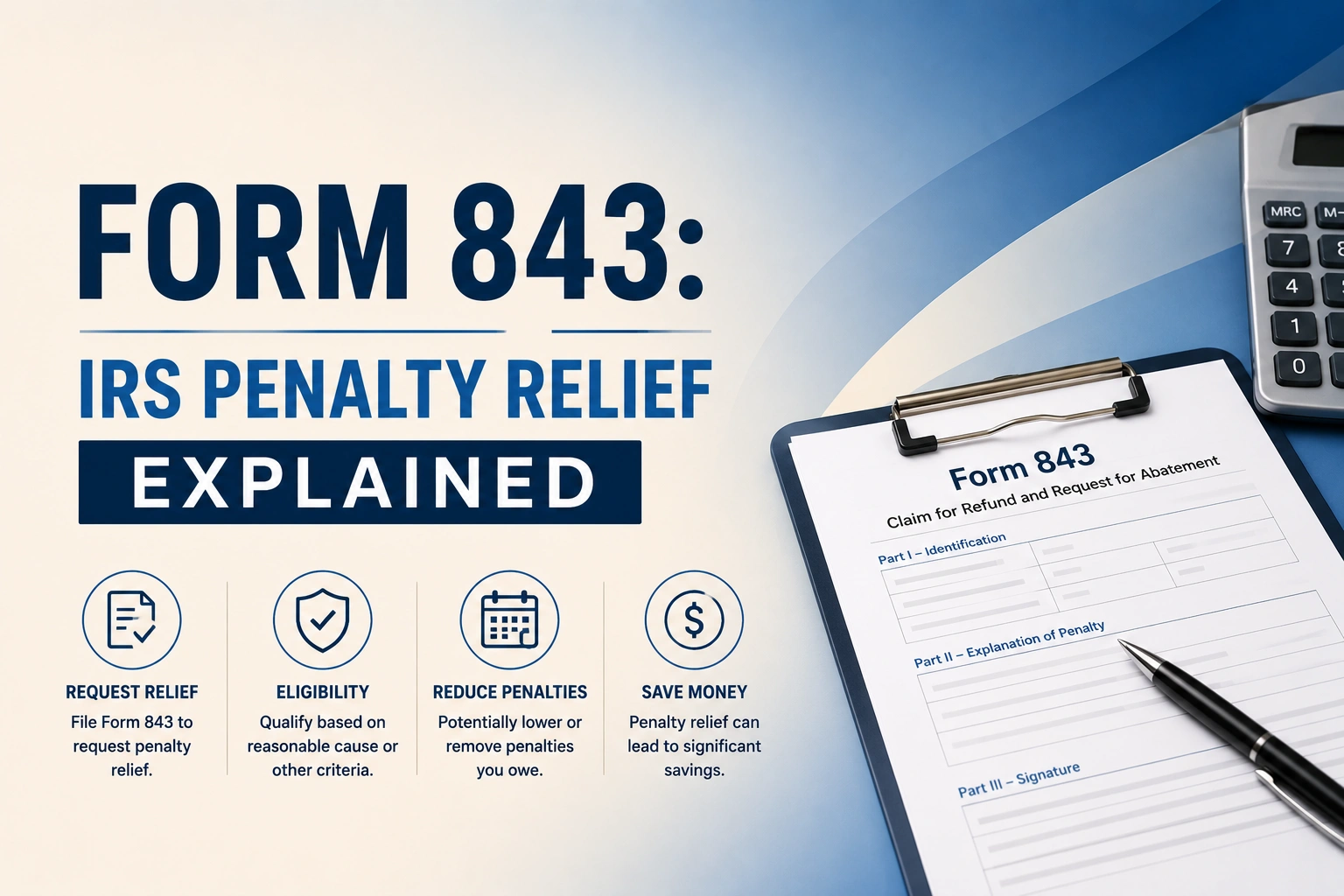
Getting hit with unexpected IRS penalties can be overwhelming, especially if you think you had a good reason for being behind. The good news is the IRS offers a way to request penalty abatement or interest reduction through Form 843, Claim for Refund and Request for Abatement.
In this article we’ll explain what Form 843 is, when you can use it, who qualifies and how to file it so you have the best chance of success.
If you’re struggling with tax penalties, the experienced team at Tax Law Advocates can help you determine your eligibility and prepare a strong request for relief. Learn more about our IRS penalty abatement services today.
Why IRS Penalties Happen
The IRS issues penalties for many reasons including:
- Filing tax returns late
- Paying your tax bill after the due date
- Not making estimated tax payments
- Underreporting income or errors on returns
Even a small mistake or delay can add up to big charges as penalties are often combined with daily compounding interest. That’s why understanding your relief options is key.
What Is Form 843
Form 843 is an official IRS form that allows taxpayers to request relief from certain penalties, interest or additional taxes that were improperly or unfairly assessed. It can also be used to claim a refund in specific situations.
Taxpayers file Form 843 to:
- Request penalty abatement due to reasonable cause (e.g. illness, natural disaster or reliance on incorrect IRS advice).
- Get a refund or reduction of interest if the IRS caused a processing delay or made an error.
- Abate certain excise taxes or employment taxes.
Important: You can’t use Form 843 to request a refund for income tax or employment tax you overpaid. That’s done with Form 1040-X or the appropriate amended return form.
Who Qualifies for Penalty Relief
You may qualify for relief using Form 843 if:
- You can show reasonable cause for not filing or paying.
- The penalty was the result of an IRS error or incorrect written advice. You’re eligible for First-Time Penalty Abatement (FTA), which is a one-time waiver available to taxpayers with a clean filing and payment history.
- The penalty was applied to an excise, gift or estate tax in error.
If you’re not sure which type of penalty applies to you, our tax debt relief team can review your IRS notices and determine the best relief strategy.
How to File Form 843 Step-by-Step
- Download the form from the official IRS website or get it from your tax professional.
- Enter your information – include your name, address, Social Security or EIN and the tax period in question.
- Specify the type of tax or penalty you’re requesting relief from (e.g. “failure-to-file penalty for tax year 2022”).
- State your reason clearly – explain in detail why you think the penalty should be abated. Attach medical records, proof of natural disaster or IRS correspondence.
- Attach supporting documents – the IRS gives more weight to well-documented requests.
- Mail the form to the IRS address shown in the instructions or on your notice of penalty.
A tax attorney can make sure your request is properly framed, supported by proper documentation and submitted to the right IRS office.
When to File Form 843
Generally you must file Form 843 within three years from the date you filed your original return or within two years from the date you paid the tax, whichever is later.
Delaying your submission could mean losing your right to relief or refund, so act fast.
Why the IRS Approves Penalty Abatement
- Serious illness or death in the family
- Natural disasters or unexpected events that prevented you from filing or paying
- Reliance on incorrect IRS advice
- Bookkeeping errors beyond your control
- First-Time Penalty Abatement eligibility
If any of these apply, consult our tax attorneys to help you prepare your case for penalty relief.
How Tax Law Advocates Can Help
Our team of experts specialise in resolving tax issues with the IRS. We can:
- Determine if you qualify for Form 843 penalty relief or other abatement options
- Prepare and submit all necessary documentation
- Negotiate with the IRS on your behalf. Check out other relief options like an offer in compromise or installment agreement
Don’t let an avoidable IRS penalty get out of control! Call us today for a free consultation.
We Can Help
If you’ve received an IRS notice of penalty or interest you don’t have to go it alone. The experts at Tax Law Advocates will help you file Form 843, protect your rights and reduce your debt.
Get in touch today for your free consultation.