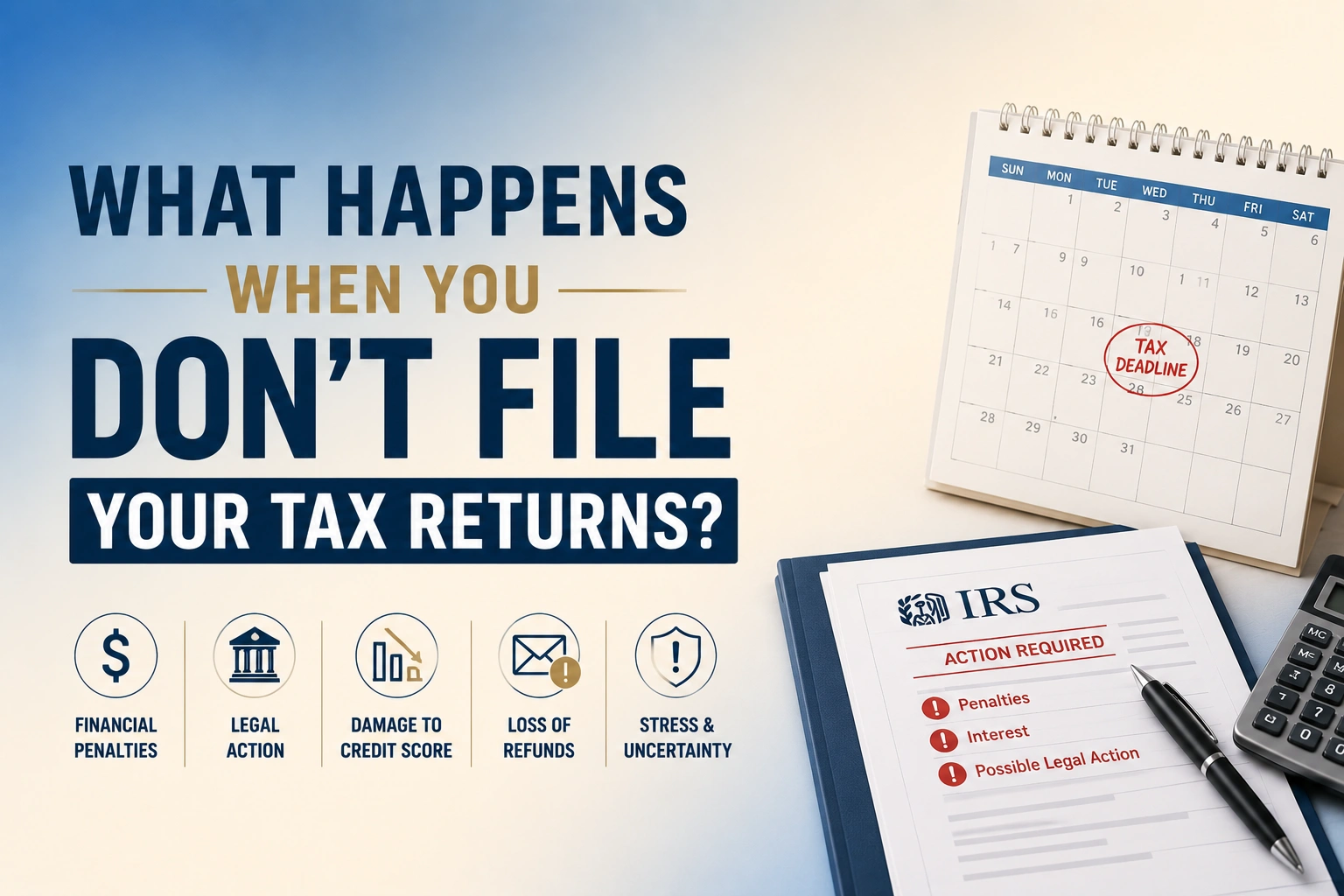
Falling behind on filing your tax returns may feel like something you can put off but the consequences of not filing are real and serious. Whether you’re missing a single year or multiple years, the Internal Revenue Service (IRS) has a range of tools and enforcement actions that can quickly escalate.
In this article we’ll explore what happens when you don’t file your taxes, how the IRS responds, what risks you face and how you can take action to get back into compliance.
If you’re already behind, you can still take steps to protect yourself. Learn how Tax Law Advocates’ tax relief services can help you get back on track.
Why Filing Taxes Matters
- Claiming refunds – If you’re owed a refund, filing is your only way to receive it. The IRS limits how long you can claim those refunds.
- Avoiding penalties and interest – Even if you can’t pay what you owe now, filing your returns on time (or as soon as possible) stops additional penalties from mounting due to non-filing.
- Maintaining financial flexibility – Many lenders, landlords and other financial institutions ask for tax returns. Lack of filings can hurt your ability to qualify for loans, mortgages or rental approvals.
- Avoiding substitution filings – If you fail to file, the IRS may file a “substitute for return” (SFR) on your behalf based on the income it knows you earned, often without deductions or credits you’re entitled to, which usually means a higher tax bill.
What is The IRS Process When You Don’t File Your Taxes?
- The IRS monitors employment and third-party income reporting (such as W-2s and 1099s). If you fail to file, you may receive a CP 59 notice informing you the IRS has no return on file for you.
- If you still don’t respond, the IRS may issue a CP 2556 (Statutory Notice of Deficiency) after preparing an SFR. At that point you have limited days to dispute it or the IRS assessment becomes final.
- Meanwhile, interest and penalties accrue from the original due date of the return until you file and pay what’s owed.
Financial Consequences of Not Filing Taxes
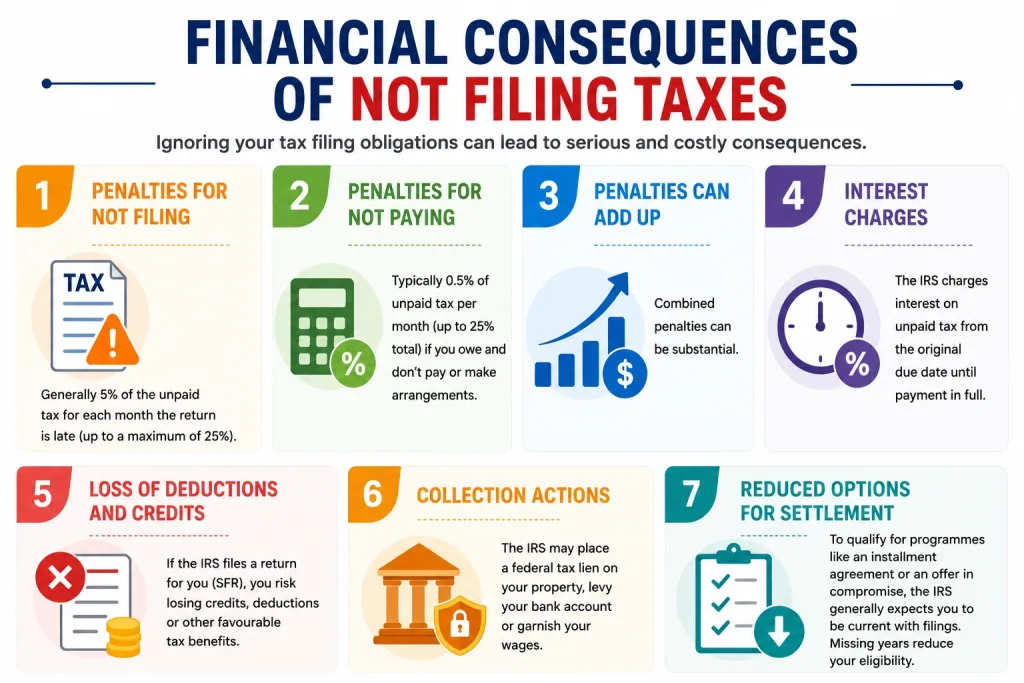
- Failure-to-file penalty: Generally 5% of the unpaid tax for each month the return is late (up to a maximum of 25%).
- Failure-to-pay penalty: Typically 0.5% of unpaid tax per month (up to 25% total) if you owe and don’t pay or make arrangements.
- Combined penalties can be substantial.
- Interest: The IRS charges interest on unpaid tax from the original due date until payment in full.
- Loss of deductions/credits: If the IRS files an SFR for you, you risk losing credits, deductions or other favourable tax benefits.
- Collection actions: The IRS may place a federal tax lien on your property, levy your bank account or garnish your wages.
- Reduced options for settlement: To qualify for programmes like an installment agreement or an offer in compromise, the IRS generally expects you to be current with filings. Missing years reduce your eligibility.
Criminal and Legal Risks
Most taxpayers who fail to file are subject to civil penalties rather than criminal prosecution, but that doesn’t mean criminal risk is zero. Willful failure to file with intent to evade taxes could trigger criminal tax evasion or fraud charges. If the IRS can prove intent, prosecution is possible. While rare, the consequences of conviction include fines and even prison.
How Far Back the IRS Can Go
The IRS generally has a statute of limitations of three years to assess tax after a return is filed. But if you haven’t filed, there is effectively no statute of limitations until a return is filed.
The IRS may decide to go back six years or more if there’s substantial understatement of income or fraud is involved. In practice, the agency often focuses on the most recent six years of returns when you are behind.
What You Should Do If You Haven’t Filed Your Taxes
- Gather your records – Locate W-2s, 1099s, business income and expense records, bank statements and other financial information for the missing years.
- File as soon as possible – Even if you can’t pay the full amounts due, filing the returns and declaring your correct income reduces penalty risk and improves your options.
- Exploration of relief options – Once you are up to date with filings, you may qualify for payment plans, offer in compromise, currently not collectible status, or penalty abatement if you show reasonable cause.
- Engage a tax professional – Because unfiled returns often involve complex balancing of records, credits, deduction eligibility and negotiation with the IRS, working with experienced tax attorneys or enrolled agents can protect your rights and maximise your relief.
Why The Longer You Wait, The Worse It Gets
- Penalties and interest continue accruing until you file and pay.
- Your missing-filing status limits your options with the IRS, their programs favour compliance.
- The IRS’s data systems may trigger automated collection notices, liens or levies before you’ve even filed.
- Not filing for multiple years harms your credit profile, your ability to obtain financing and may complicate job or rental applications.
- If you are ever audited or subjected to enforcement, your lack of filing gives the IRS a strong hand with less negotiation flexibility.
In short: not filing your tax returns may seem like a temporary fix, but it carries serious and escalating consequences of financial, legal and personal levels. The sooner you address missing returns, the better your chances to limit penalties, regain eligibility for relief programmes and stop the clock on accruing interest.
We are Here to Help!
If you have unfiled tax returns, owe taxes or are concerned about enforcement by the IRS or state tax authorities, contact the team at Tax Law Advocates for a free consultation. Let us review your situation, help you catch up on filings and protect your rights.