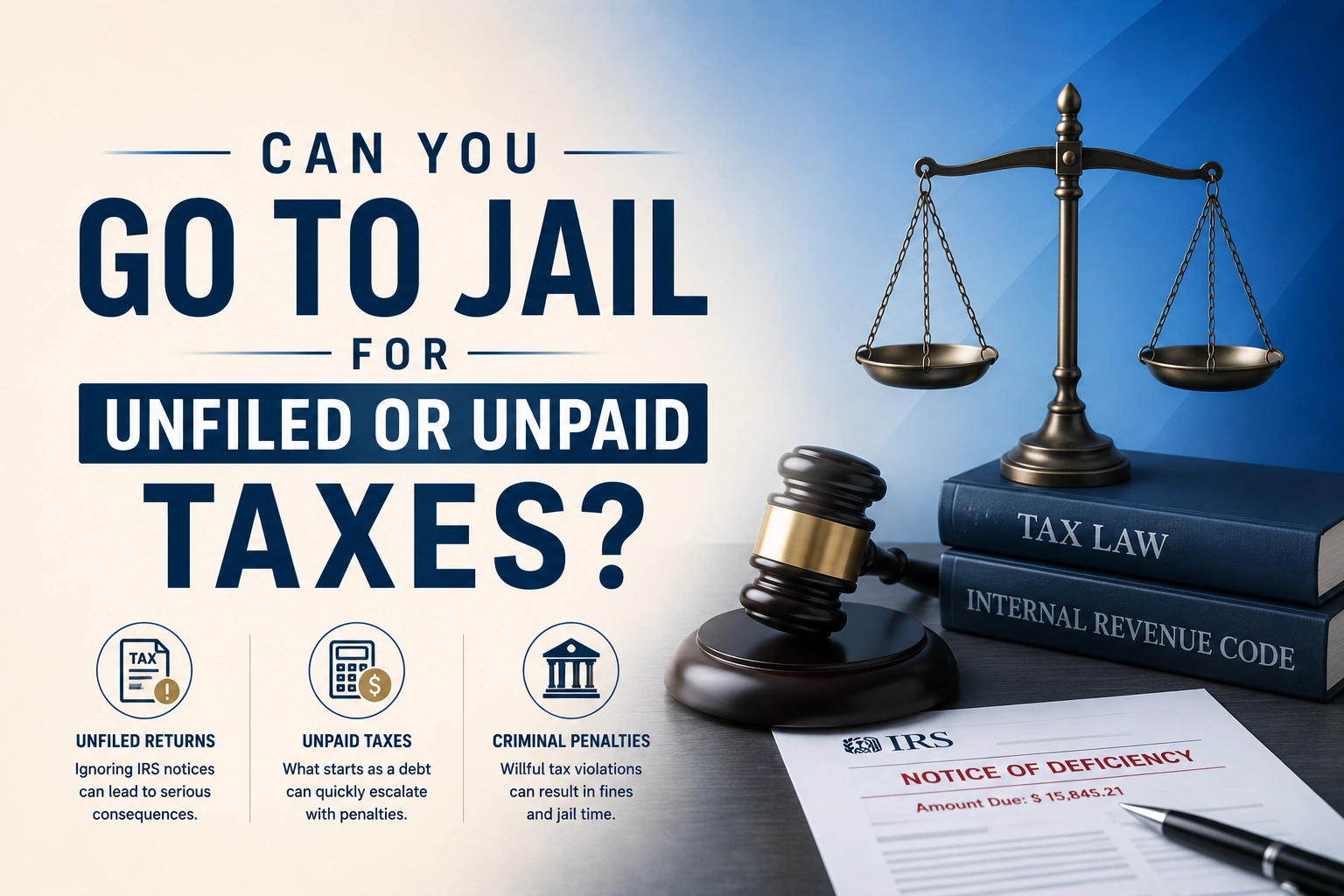
Missing a tax deadline can happen for many reasons, such as financial hardship, confusion or even simple oversight. While most tax issues result in civil penalties rather than criminal prosecution, the IRS can pursue jail time for taxpayers who willfully evade their obligations.
In this article, we’ll explain when unpaid or unfiled taxes become a criminal matter, the penalties involved and how to protect yourself if you’re at risk.
If you’ve missed filings or owe back taxes, the team at Tax Law Advocates can help you resolve your case and avoid severe consequences. Learn more about our tax debt relief services today.
Why People Don’t File or Pay Their Taxes
Common reasons taxpayers fall behind include:
- Unexpected financial hardship or job loss
- Medical or family emergencies
- Fear of owing more than they can pay
- Misunderstanding IRS filing requirements
- Neglect or poor record-keeping
While these situations are often not intentional, the IRS distinguishes between accidental non-compliance and willful tax evasion and that difference determines whether jail is possible.
Civil vs. Criminal Tax Penalties
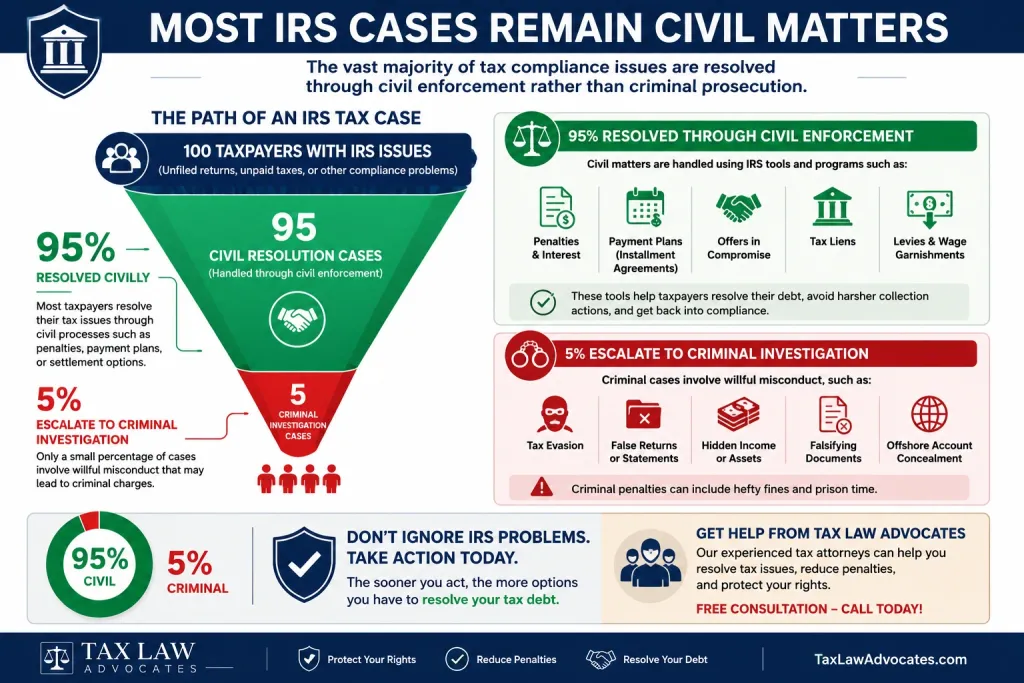
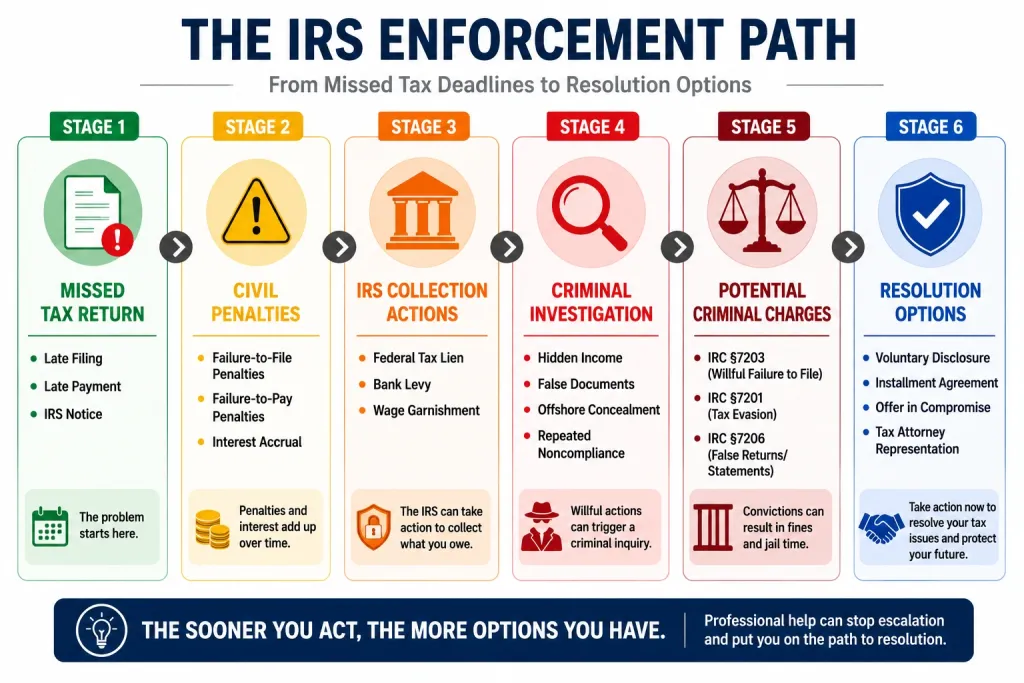
Most cases of unfiled or unpaid taxes are civil matters. The IRS typically issues penalties and interest rather than pursuing criminal prosecution.
Civil penalties can include:
- Failure-to-file penalty: 5% per month (up to 25%) on the unpaid tax.
- Failure-to-pay penalty: 0.5% per month (up to 25%) until the balance is paid.
- Interest: Accrues daily from the original due date.
- Collection actions: The IRS may issue tax liens or levies or garnish wages.
But when the IRS believes a taxpayer intentionally avoided paying or filing, the case can become a criminal investigation.
When Jail Becomes a Possibility
The IRS can pursue criminal prosecution for:
- Willful failure to file a tax return (IRC §7203)
- Tax evasion (IRC §7201)
- Filing false returns or statements (IRC §7206)
- Aiding or assisting another person in tax evasion
Penalties Willful failure to file: Up to 1 year in prison for each unfiled year, plus fines up to $25,000.
- Tax evasion: Up to 5 years in prison and fines up to $100,000.
- Filing a false return: Up to 3 years in prison and fines up to $250,000.
While the IRS rarely seeks jail time for taxpayers who simply can’t pay, those who willfully conceal income, falsify documents, or repeatedly ignore IRS contact face the greatest risk.
IRS Criminal Investigation Process
If your case is flagged for potential fraud, it may be referred to the IRS Criminal Investigation Division (CID). CID agents investigate serious violations such as deliberate evasion, false filings and offshore account concealment.
Indicators that your case could escalate include:
- Repeated failure to respond to IRS notices
- Large discrepancies between reported and actual income
- Use of false Social Security numbers or identities
- Destruction or concealment of financial records
If you believe you’re under investigation or have received a notice from CID, contact an IRS criminal tax defence attorney immediately.
What To Do If You Haven’t Filed or Paid
- Don’t ignore the problem – The longer you wait, the fewer options you’ll have.
- Gather your documents – Collect income records (W-2s, 1099s, expenses) for all unfiled years.
- File as soon as possible – Even late returns show good-faith compliance and may prevent criminal referral.
- Explore relief options – Programmes such as installment agreements, offer in compromise, or penalty abatement can help you reduce what you owe.
- Get professional help – Experienced tax attorneys can represent you before the IRS and help negotiate a solution. Contact our team today for a free consultation.
Voluntary Disclosure May Prevent Prosecution
If you haven’t filed taxes in years, the IRS’s Voluntary Disclosure Program can be a lifesaver. It allows taxpayers to come forward before they’re contacted by the IRS, potentially avoiding criminal charges.
Our team can help you prepare a voluntary disclosure submission and work toward compliance while protecting your legal interests. Learn more about back tax return preparation and proactive IRS relief options.
How Tax Law Advocates Can Help
If you are wondering, “Can You Go to Jail for Unfiled or Unpaid Taxes?”, the answer depends on your specific circumstances and how quickly you take action. At Tax Law Advocates, we help individuals and business owners resolve unfiled tax returns, unpaid tax balances, and IRS enforcement issues before they escalate into more serious problems.
Our experienced tax attorneys assist with:
- Filing back tax returns and restoring compliance
- Requesting penalty and interest relief
- Stopping IRS levies, liens and wage garnishments
- Defending clients in IRS audits and criminal tax investigations
- Evaluating eligibility for installment agreements, Offers in Compromise, and other tax relief solutions
We Can Help
If you’re asking yourself, “Can You Go to Jail for Unfiled or Unpaid Taxes?”, don’t wait until the IRS takes further action. Most tax problems can be resolved through proactive compliance, strategic representation, and timely intervention. Whether you’ve missed filings, received IRS notices, or fear potential criminal exposure, our team can review your situation and help you understand your options.
Contact Tax Law Advocates today for a free confidential consultation and take the first step toward resolving your tax issues before they become more serious.