For many business owners, few fears feel more terrifying than losing the company they spent years building.
The moment IRS notices begin arriving, panic often starts immediately.
Business owners begin searching online:
- “Can the IRS take my LLC?”
- “Can the IRS shut down my business?”
- “Can the IRS freeze my business bank account?”
- “Will the IRS seize business assets?”
- “What happens if my business owes payroll taxes?”
- “Can the IRS come after me personally?”
Across Reddit, TikTok, YouTube comments, and entrepreneur forums, business owners constantly share stories about:
- sleepless nights,
- frozen cash flow,
- fear of payroll collapse,
- IRS notices,
- and overwhelming financial pressure.
Some online creators claim:
- “The IRS can instantly shut down your business.”
Others claim: - “LLCs fully protect owners from IRS collections.”
Both are dangerously oversimplified.
The truth is that IRS business collection matters are serious, but the internet often exaggerates or misunderstands how IRS enforcement actually works.
At Tax Law Advocates, business owners frequently seek guidance because they fear losing their company, payroll stability, or financial future due to IRS tax debt. Professionals including David Cho and Jamie Roman help business owners understand what IRS collection risks are real, what online myths are misleading, and what resolution strategies may exist before business tax problems escalate further.
This guide focuses specifically on the question thousands of business owners secretly search online every month:
Can the IRS take your LLC or business?
Can the IRS Legally Take Your Business?
The short answer is:
The IRS has broad collection authority in certain serious tax situations.
However, most business IRS cases do not begin with immediate seizure or shutdown.
This is one of the biggest misconceptions online.
What Business Owners Usually Fear Most
Most business owners fear:
- losing payroll capability,
- frozen bank accounts,
- losing inventory,
- public embarrassment,
- or business collapse.
For entrepreneurs, business debt feels personal because the company often represents:
- years of sacrifice,
- identity,
- family stability,
- and financial survival.
What Happens When a Business Owes the IRS?
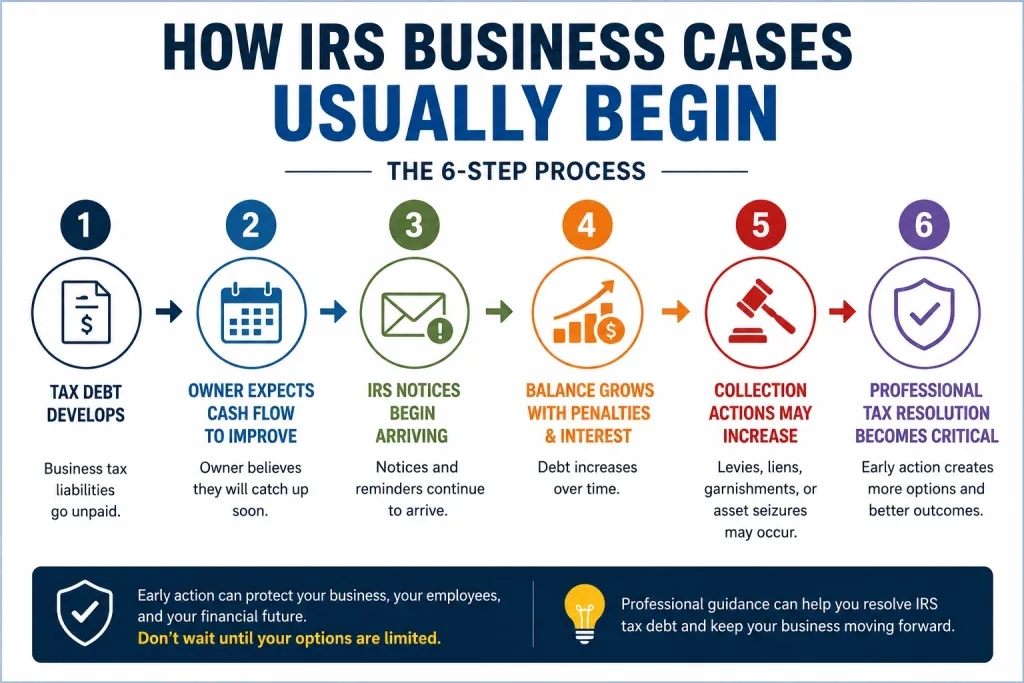
Business IRS cases often begin gradually.
At first, many owners believe:
- “I’ll catch up next month.”
- “Cash flow will improve.”
- “I just need more time.”
Then the IRS notices continue arriving.
Common Types of IRS Business Debt
Payroll Tax Debt
This is one of the most serious business tax problems.
Unfiled Business Returns
Many struggling businesses fall behind on filings during financial stress.
Income Tax Balances
Outstanding business tax balances may trigger collection activity over time.
Sales and Operational Cash Flow Problems
Many business owners use available cash to:
- pay employees,
- cover rent,
- or keep operations alive,
while delaying IRS obligations.
Can the IRS Shut Down Your Business?
Many business owners fear that unpaid tax debt will immediately lead to the IRS shutting down their company. In reality, the IRS typically focuses on collecting the tax debt rather than closing a business. In most cases, the agency begins with notices, payment demands, and collection efforts designed to bring the business into compliance.
From a tax attorney’s perspective, the biggest risk is not the existence of tax debt itself—it is ignoring the problem. Businesses that communicate with the IRS and pursue resolution options often have more opportunities to protect operations and avoid aggressive enforcement actions.
When Business Tax Debt Becomes More Serious
The risk level increases when a business repeatedly ignores IRS notices, fails to file required returns, or accumulates substantial payroll tax liabilities. At that point, the IRS may pursue liens, levies, or other collection actions that can disrupt daily operations and cash flow.
Why Payroll Tax Problems Create Significant IRS Exposure
Payroll tax debt is often treated differently from other business tax liabilities because the funds involved generally include taxes withheld from employees’ paychecks. The government expects employers to hold and remit these amounts on behalf of employees.
As a result, unresolved payroll tax issues often receive heightened IRS attention. Business owners frequently fall behind during periods of financial hardship, intending to catch up later, but the liability can grow rapidly through penalties and interest.
What Business Owners Should Know About Payroll Tax Debt
Early intervention is critical. Once payroll tax balances begin accumulating, the IRS may increase collection activity and closely examine who was responsible for handling payroll tax obligations within the business.
Can Business Owners Be Personally Liable for Business Tax Debt?
Many LLC owners assume that their business structure completely shields them from IRS collection actions. While LLCs and corporations provide important legal protections, those protections are not unlimited.
Certain tax situations may expose owners, officers, partners, or other responsible individuals to personal liability, particularly when payroll taxes are involved. The IRS evaluates the facts of each case to determine who had authority over financial decisions and tax compliance.
Why Professional Guidance Matters
Determining potential personal exposure requires a detailed review of ownership structure, financial authority, payroll responsibilities, and the specific tax liabilities involved. An experienced tax attorney can evaluate these factors before the situation escalates.
Understanding IRS Collection Notices for Businesses
Receiving an IRS notice does not automatically mean the government is about to seize assets or close a business. Most notices are part of a structured collection process that gives taxpayers opportunities to respond and resolve the issue.
The key is understanding where the business stands in that process and responding appropriately. Ignoring notices often reduces available options and increases collection pressure.
What IRS Notices May Indicate
Depending on the stage of collection, notices may involve balance due requests, warnings about potential enforcement actions, federal tax liens, or levy-related communications. Each notice should be reviewed carefully to determine the appropriate response strategy.
Can IRS Tax Relief Programs Help Businesses?
Many businesses qualify for collection alternatives that can reduce financial pressure while working toward compliance. Potential options may include installment agreements, penalty relief, temporary collection suspension, or other negotiated resolutions.
The best solution depends on the business’s cash flow, assets, industry, compliance history, and long-term financial outlook.
Why No Two Business Cases Are Alike
Two companies with similar tax balances may require completely different resolution strategies. Effective tax representation involves analyzing the full financial picture rather than applying a one-size-fits-all approach.
How Tax Law Advocates Assists Businesses Facing IRS Problems
At Tax Law Advocates, businesses often seek help after receiving collection notices, experiencing payroll tax issues, or facing concerns about liens and levies. Tax Attorney David Cho works with business owners to evaluate IRS collection risks, identify available resolution options, and develop strategies designed to protect both compliance and business continuity.
Jamie Roman assists clients throughout the process by helping organize documentation, coordinate communications, and support case management efforts.
Why Organization Matters During an IRS Business Case
Successful IRS resolutions often depend on accurate records, timely responses, complete financial documentation, and strategic communication. Maintaining organized records can significantly improve the efficiency and effectiveness of the resolution process.
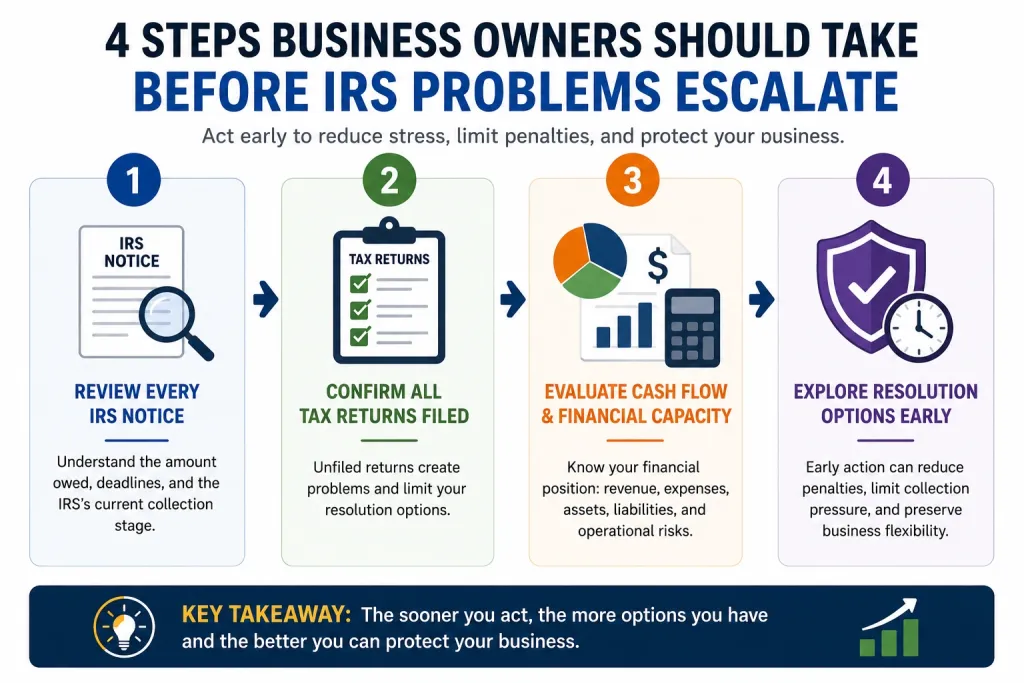
Steps Business Owners Should Take Before IRS Problems Escalate
Business owners can often improve their position by taking action early rather than waiting for collection activity to intensify.
Review Every IRS Notice Carefully
Each notice provides important information about the amount owed, deadlines, and the IRS’s current collection stage. Understanding the issue is the first step toward resolving it.
Confirm All Tax Returns Have Been Filed
Unfiled returns frequently create additional complications and can limit available resolution options. Bringing filing obligations current is often a critical part of the process.
Evaluate Cash Flow and Financial Capacity
Before pursuing a resolution strategy, business owners should understand their actual financial position, including revenue, expenses, assets, liabilities, and operational risks.
Explore Resolution Options Before Collections Intensify
Early action may help reduce penalties, limit collection pressure, and preserve operational flexibility. In many cases, waiting simply allows interest, penalties, and enforcement risks to grow.
Final Thoughts: IRS Problems Feel Personal for Business Owners
For entrepreneurs, IRS debt is not just financial.
It threatens:
- identity,
- years of hard work,
- family security,
- and business survival.
That emotional pressure is exactly why fear and misinformation spread so aggressively online.
But while IRS business collection matters are serious, many online myths exaggerate how IRS enforcement actually works.
At Tax Law Advocates, professionals including Yongho David Cho and Jamie Roman help business owners understand realistic IRS collection risks and possible resolution strategies before business tax problems become even more difficult financially and emotionally.
The most important thing business owners can do is replace panic and internet myths with accurate information and early action.
Frequently Asked Questions
Can the IRS take your LLC?
The IRS has broad collection authority in certain tax matters, but business collection situations depend heavily on the circumstances and collection stage.
Can the IRS freeze a business bank account?
IRS collection enforcement may involve levy procedures depending on unresolved tax debt situations.
Can the IRS shut down a business?
IRS business collection matters are serious, but most cases involve multiple collection stages before extreme enforcement actions occur.
Can payroll tax problems become personal liability issues?
Certain payroll tax matters may involve responsible party analysis depending on the situation.
Why do business owners ignore IRS notices?
Many entrepreneurs delay action because of financial stress, fear, operational pressure, or emotional overwhelm.
This article is for educational purposes only and does not constitute legal or tax advice. Viewing this page does not create an attorney-client relationship. IRS outcomes depend on your specific financial situation, documentation, compliance status, and procedural posture. If you have received time-sensitive IRS notices, seek qualified professional advice promptly.