One of the fastest-growing IRS fears online has nothing to do with traditional bank accounts anymore.
Now people are asking:
- “Can the IRS take money from Cash App?”
- “Can the IRS freeze my Venmo?”
- “Can the IRS see my PayPal transactions?”
- “Can the IRS levy digital payment apps?”
- “Should I move money out of my bank account?”
- “Can Cash App protect me from the IRS?”
Across TikTok, Reddit, YouTube comments, and online financial forums, taxpayers constantly debate whether digital payment apps are “safe” from IRS collections.
Some social media creators claim:
- “The IRS can’t touch Cash App.”
- “Venmo is private.”
- “PayPal protects your money.”
- “The IRS only looks at banks.”
These claims spread rapidly because financially stressed taxpayers are searching desperately for reassurance and loopholes.
But dangerous IRS misinformation online can make tax situations significantly worse.
At Tax Law Advocates, taxpayers often ask whether moving money into digital payment apps can help protect assets from IRS collection activity. Professionals including Yongho (David) Cho and Jamie Roman help taxpayers understand how IRS collection authority actually works instead of relying on viral internet myths.
This guide focuses specifically on one of the most searched modern IRS questions online:
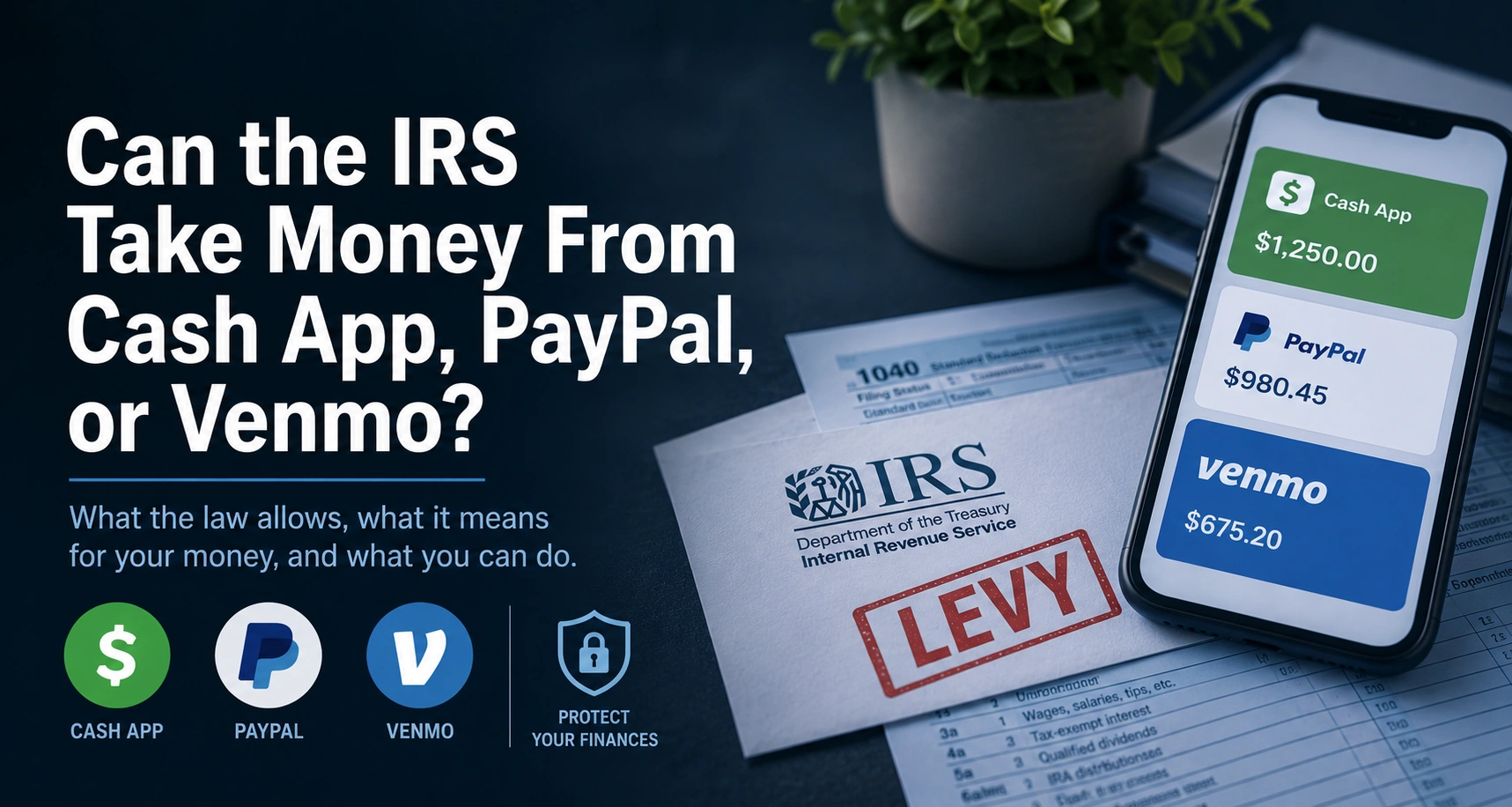
Can the IRS take money from Cash App, PayPal, or Venmo?
Why This Question Has Exploded Online
A few years ago, most taxpayers only worried about:
- bank accounts,
- paychecks,
- or property.
Now millions of Americans use:
- Cash App,
- PayPal,
- Venmo,
- Zelle,
- and digital payment platforms
for daily financial activity.
As these apps became more popular, taxpayers began wondering:
- “Can these apps protect money from the IRS?”
- “Can the IRS monitor these transactions?”
- “Can digital wallets be levied?”
Why Social Media Fuels This Fear
Financial TikTok creators often discuss:
- “hidden money,”
- “bank alternatives,”
- or “ways around the IRS.”
This creates massive curiosity and confusion.
Why Taxpayers Want to Believe These Myths
People struggling with IRS debt often feel:
- financially trapped,
- emotionally overwhelmed,
- and desperate for protection.
That emotional vulnerability makes misleading online advice spread extremely fast.
Can the IRS Legally Take Money From Cash App, PayPal, or Venmo?
The short answer is:
Potentially yes, depending on the situation and collection process involved.
The IRS has broad collection authority in certain tax enforcement matters.
However, social media often oversimplifies how these processes actually work.
What Many Taxpayers Misunderstand
Some taxpayers incorrectly believe:
- digital payment apps are invisible,
- IRS collections only apply to traditional banks,
- or moving money into apps automatically protects assets.
That is often dangerously misleading.
Why This Myth Can Become Financially Risky
Taxpayers who rely on internet myths may:
- delay resolution,
- ignore IRS notices,
- or make poor financial decisions based on false confidence.
Can the IRS See PayPal, Cash App, or Venmo Transactions?
This is one of the biggest online fears.
People constantly search:
- “Can the IRS track Venmo?”
- “Can the IRS see Cash App?”
- “Can the IRS monitor PayPal?”
The answer is more complicated than most TikTok videos suggest.
Why Digital Payment Apps Are No Longer “Hidden”
Modern financial systems are increasingly interconnected.
Digital payment platforms may involve:
- transaction reporting,
- compliance obligations,
- identity verification,
- and financial recordkeeping.
Why IRS Visibility Concerns Are Growing
Taxpayers are increasingly worried because:
- side hustles,
- freelance income,
- online sales,
- and digital transactions
have become extremely common.
Why Taxpayers Panic About IRS Levies
One of the most emotionally terrifying IRS fears is losing access to money suddenly.
People fear:
- frozen accounts,
- unpaid rent,
- missed payroll,
- inability to buy groceries,
- or financial collapse.
That is why searches related to IRS levies continue growing rapidly online.
What an IRS Levy Actually Means
An IRS levy involves collection action against assets or financial resources after certain collection procedures occur.
Why Levies Feel So Personal
Unlike tax notices, levies affect real-day survival:
- bills,
- food,
- transportation,
- and family stability.
IRS Myth #1: “Cash App Protects You From the IRS”
This is one of the most dangerous myths currently spreading online.
Some social media creators imply taxpayers can avoid IRS collections by:
- moving money to Cash App,
- avoiding banks,
- or using payment apps instead.
This creates false confidence.
Why “Hidden Money” Strategies Often Backfire
Trying to outsmart IRS collections using internet loopholes may create:
- additional financial risk,
- compliance problems,
- or escalation concerns.
IRS Myth #2: “Venmo and PayPal Are Private From the Government”
Another major misconception online is that digital payment apps operate outside financial reporting systems.
That is often inaccurate.
Why Digital Payments Are Receiving More Attention
As digital payments grow, reporting and compliance requirements continue evolving.
Why Gig Workers Are Especially Concerned
Freelancers, creators, contractors, and online sellers often rely heavily on:
- PayPal,
- Venmo,
- or Cash App income.
That creates growing anxiety about:
- IRS visibility,
- tax reporting,
- and collection risk.
What Usually Happens Before Serious IRS Collection Action
One of the biggest myths online is that the IRS instantly freezes accounts without warning.
Most IRS collection situations involve multiple stages first.
Typical IRS Collection Progression
IRS Notices
The IRS usually sends multiple notices requesting payment or communication.
Collection Warnings
Notices may become increasingly urgent.
Federal Tax Liens
The IRS may file liens protecting government interests.
Levy Warnings
Final collection notices may be issued before enforcement escalates further.
How Tax Law Advocates Helps Taxpayers Understand IRS Collection Risks
At Tax Law Advocates, taxpayers often seek guidance after becoming confused by conflicting online advice about digital payment apps and IRS collections.
Yongho (David) Cho works on IRS collection and tax resolution matters involving:
- levies,
- tax liens,
- compliance issues,
- and collection strategy analysis.
Meanwhile, Jamie Roman helps coordinate communication and documentation management during the IRS resolution process.
Why Real IRS Guidance Matters More Than TikTok Advice
Every IRS situation depends on:
- financial condition,
- compliance,
- collection stage,
- and individual circumstances.
What applies to one taxpayer may not apply to another because every IRS case involves different financial realities.
What Taxpayers Should Do Instead of Relying on Internet Myths
Open Every IRS Notice
Avoidance usually increases stress and confusion.
Determine Whether Returns Are Missing
Unfiled returns may significantly complicate IRS matters.
Explore Resolution Options Early
Earlier action may help reduce collection escalation risks.
Final Thoughts on IRS Collections and Digital Payment Apps
Fear and misinformation online have created enormous confusion around whether the IRS can reach money stored in digital payment platforms like Cash App, PayPal, or Venmo.
Many taxpayers desperately want to believe:
- digital apps are invisible,
- online payment systems are protected,
- or social media loopholes can outsmart IRS collections.
But financial misinformation can become extremely dangerous when taxpayers make serious decisions based on viral videos instead of accurate guidance.
At Tax Law Advocates, professionals including Yongho (David) Cho and Jamie Roman help taxpayers understand realistic IRS collection risks and possible resolution strategies before situations escalate further financially and emotionally.
The most important thing taxpayers can do is replace fear and internet myths with informed decision-making and early action.
FAQs
Can the IRS take money from Cash App?
IRS collection authority may potentially affect financial assets depending on the collection situation and legal procedures involved.
Can the IRS see Venmo transactions?
Digital payment systems involve financial reporting and recordkeeping processes that may create visibility concerns for taxpayers.
Can the IRS freeze PayPal accounts?
IRS collection matters may involve different financial assets depending on the circumstances and collection stage.
Does moving money to Cash App protect it from the IRS?
Relying on internet loophole advice may create serious financial and compliance risks.
Why are taxpayers worried about digital payment apps and the IRS?
Many taxpayers fear levies, frozen funds, and financial visibility connected to growing use of digital payment platforms.
This article is for educational purposes only and does not constitute legal or tax advice. Viewing this page does not create an attorney-client relationship. IRS outcomes depend on your specific financial situation, documentation, compliance status, and procedural posture. If you have received time-sensitive IRS notices, seek qualified professional advice promptly.