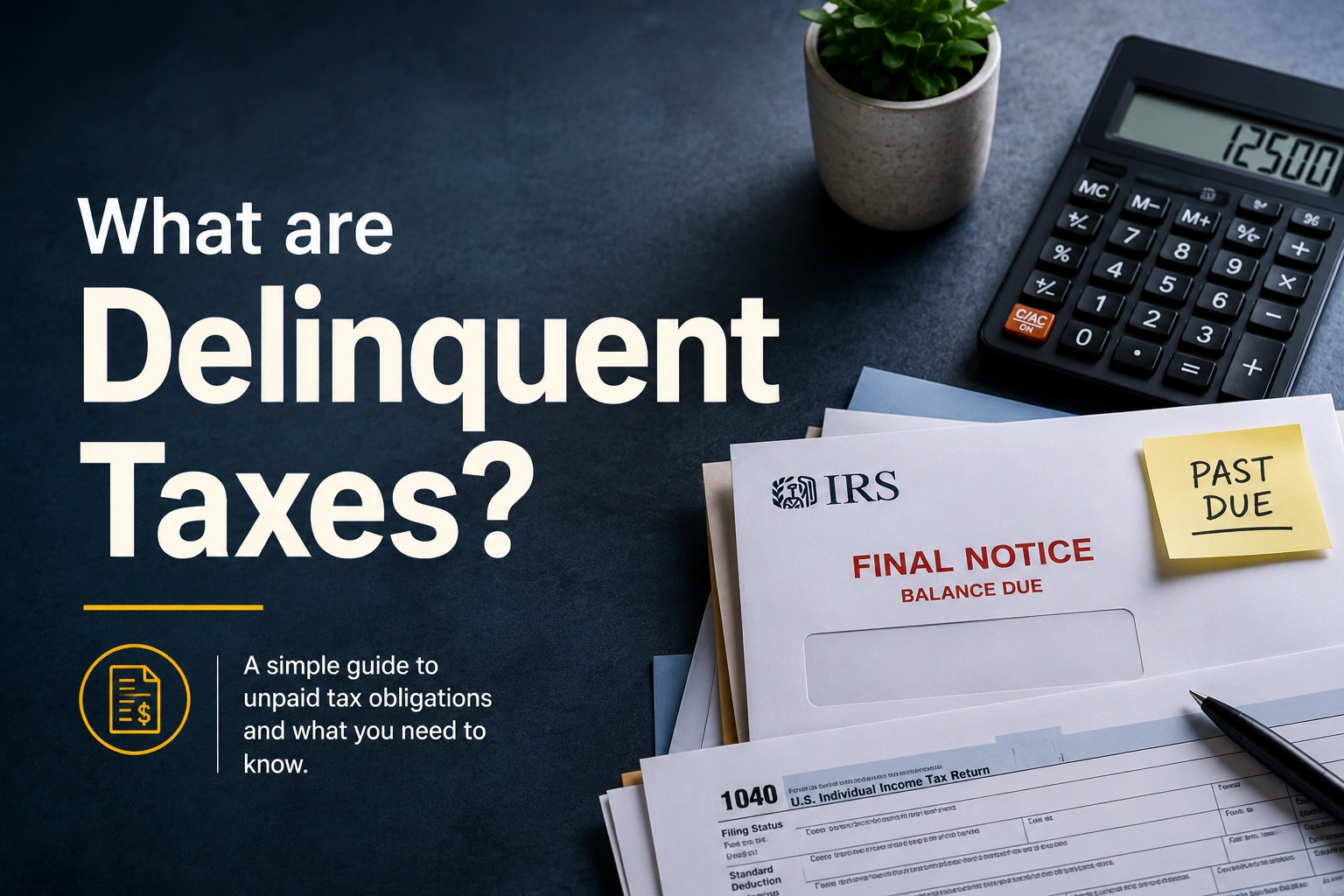
Delinquent taxes are unpaid tax liabilities that are past due. If you don’t pay or file on time, your account becomes delinquent and you may face penalties, interest and IRS collection actions.
Delinquent taxes can happen to anyone: individuals, self-employed professionals or business owners and it can get out of hand fast if ignored.
In this article we’ll cover:
- What delinquent taxes are
- How they happen
- Consequences of delinquency
- How to resolve delinquent taxes
- How to avoid delinquency in the future
If you have delinquent taxes, the team at Tax Law Advocates can help you understand your options and get you to resolution. Learn more about our IRS representation services.
How Taxes Become Delinquent
Taxes become delinquent in two ways:
- Not filing a tax return by the due date
- Filing but not paying the full amount owed
For example, if you filed your 2022 tax return but only paid half of the balance due, the remaining amount is delinquent. Even a small unpaid amount can trigger penalties and interest which compound over time.
Common Reasons for Delinquent Taxes
- Financial hardship: Job loss, medical bills or unexpected expenses may prevent full payment.
- Neglect or oversight: Forgetting to file or miscalculating taxes.
- Disputes with the IRS: Some taxpayers withhold payment due to disagreements over tax liability.
- Business mismanagement: Misreporting revenue, underpaying estimated taxes or failing to remit payroll taxes.
Knowing the reason for delinquent taxes is the first step to resolving them.
Penalties and Interest on Delinquent Taxes
When taxes are delinquent the IRS adds penalties and interest which can add up fast.
Common Penalties
- Failure-to-file penalty: 5% of the unpaid tax per month, up to 25%.
- Failure-to-pay penalty: 0.5% per month on unpaid balances, up to 25%.
- Interest: Accrues daily on unpaid balances from the original due date until paid in full.For example a $2,000 unpaid tax liability can grow to over $3,000 in one year due to penalties and interest.
Example Scenario
Jane owes $5,000 in federal taxes from last year but hasn’t paid. Within a year failure-to-file and failure-to-pay penalties could add $1,000-$1,500 to her debt plus interest. If ignored for multiple years her balance could double.
Collection Actions for Delinquent Taxes
If delinquent taxes are not paid the IRS will escalate collection efforts. Common tools include:
- Tax liens: A lien gives the IRS a legal claim to your property including real estate, vehicles and other assets.
- Levy: The IRS can seize funds from bank accounts, retirement accounts or other assets to satisfy the debt.
- Wage garnishment: Your employer may be required to withhold a portion of your wages.
- Refund offsets: Federal or state refunds may be applied to unpaid taxes.
Important: Collection actions escalate over time and interest and penalties continue to accrue.
Consequences of Delinquent Taxes
Delinquent taxes have serious financial and personal implications:
- Increased debt: Penalties and interest can double the amount owed.
- Credit impact: Federal tax liens may appear on credit reports and affect your ability to get loans or mortgages.
- Reduced options for relief: The IRS may require all returns to be current before allowing programs like installment agreements or offers in compromise.
- Stress and uncertainty: IRS letters, calls or collection actions can cause significant anxiety.
Ignoring delinquent taxes rarely improves the situation and often makes it worse.
How to Resolve Delinquent Taxes
Addressing delinquent taxes quickly can reduce penalties, protect assets and relieve stress.
Step 1: File Missing Tax Returns
Even if you can’t pay the full balance, filing shows good-faith compliance. The IRS is more likely to offer relief to taxpayers who are current on all required returns.
Step 2: Pay What You Can
Partial payments reduce penalties and interest accrual. Even a small payment shows the IRS you are taking the debt seriously.
Step 3: Negotiate With the IRS
The IRS has several programs to help taxpayers:
- Installment Agreements: Pay over time with manageable monthly payments.
- Offer in Compromise: Pay less than the full amount if paying in full would cause hardship.
- Currently Not Collectible status: Pause collection if you can’t pay due to financial hardship.
Step 4: Get Professional Help
Tax attorneys or enrolled agents can:
- Represent you before the IRS
- Stop aggressive collection actions
- Maximize relief options and minimize penalties
- Ensure compliance while negotiating the best outcome
For professional assistance contact our team today.
Additional Tips to Avoid Delinquent Taxes in the Future
- File your taxes on time every year.
- Pay as much as you can when you file.
- Consider estimated tax payments if self-employed or business owner.
- Keep organized records of income, deductions and credits.
- Consult a tax professional for complex tax situations.
FAQs About Delinquent Taxes
Can the IRS go after delinquent taxes forever?
No. The IRS generally has 10 years from the date of assessment to collect a tax debt, known as the Collection Statute Expiration Date (CSED). Certain actions like bankruptcy or offers in compromise can pause this period.
Will delinquent taxes affect my credit score?
Federal tax liens no longer directly impact FICO scores, but liens can still show up on credit reports and affect your ability to get loans or mortgages.
Can I negotiate a lower payment?
Yes. Options like offers in compromise or installment agreements allow you to pay less or pay over time. Professional representation can increase your chances of approval.
What happens if I ignore delinquent taxes?
Ignoring taxes can lead to more aggressive collection actions, more penalties and interest, liens, levies and wage garnishments.
How Tax Law Advocates Can Help
At Tax Law Advocates, we specialize in tax situations. We can:
- Prepare and file past due tax returns
- Negotiate penalties, interest and payment plans with the IRS
- Stop collection actions like levies, liens and garnishments
- Develop long term strategies to prevent future delinquencies
Got delinquent taxes?
Don’t wait for the IRS to act. Contact Tax Advocates today for a free consultation and get started on your tax debt.