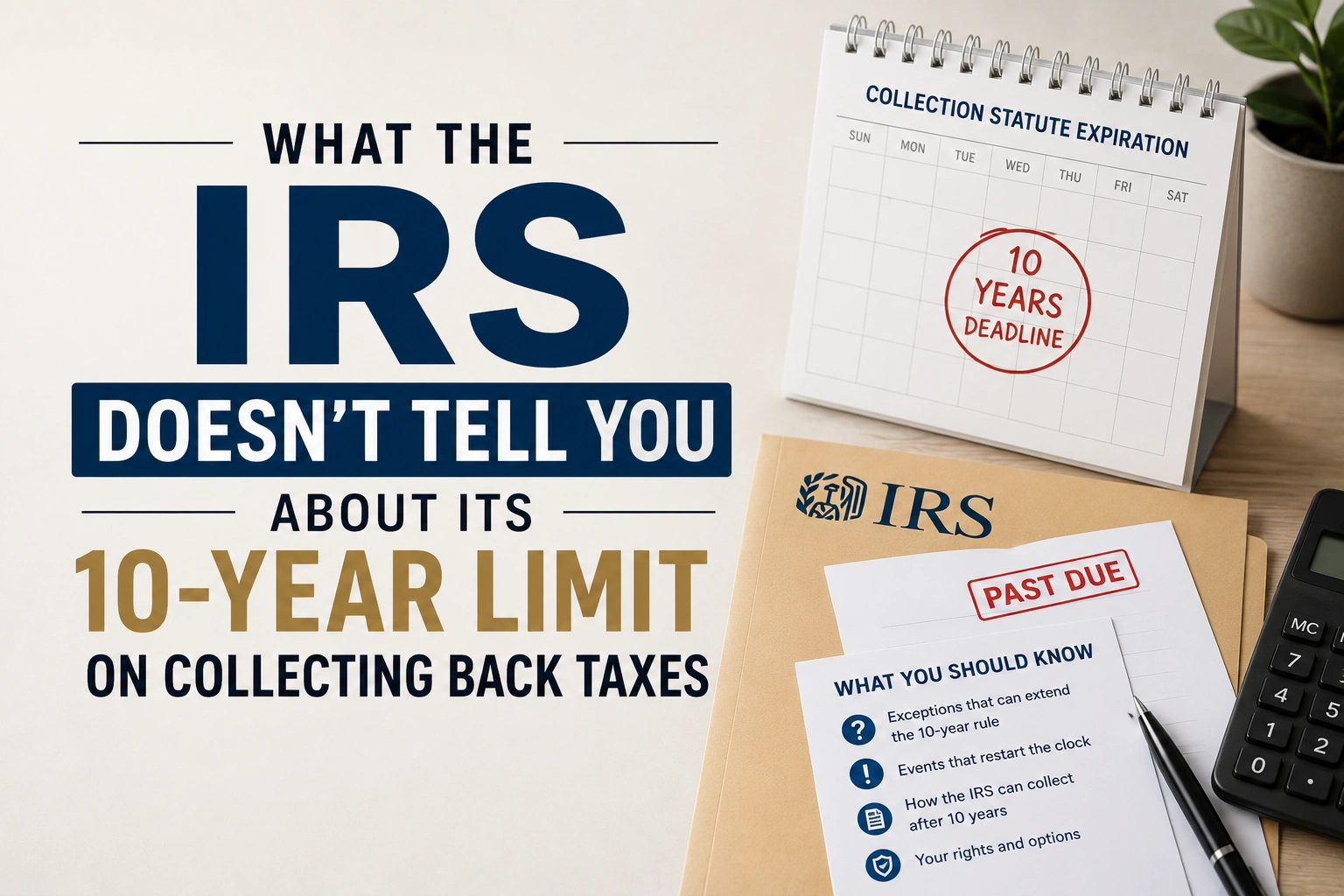
Dealing with unpaid tax liability can feel like a never-ending burden. But the IRS doesn’t have unlimited time to collect. In many cases, the agency must stop collection efforts after what’s known as the Collection Statute Expiration Date (CSED), generally 10 years from the date your tax was assessed.
In this article, we’ll walk through how the 10-year statute of limitations works, what events suspend or extend it, how you can check your own expiration date and what to do if the clock is about to run out. If you’re facing IRS collection actions or uncertain how long you’re liable, the legal team at Tax Law Advocates can evaluate your situation and protect your rights.
What is the Collection Statute of Limitations?
A statute of limitations sets a deadline by which a government agency must act. Under U.S. tax law, once the IRS assesses a tax (i.e., formally enters a liability against you), it generally has 10 years to collect the unpaid amount.
After that point, the tax debt is no longer enforceable, meaning the IRS cannot file new levies, garnishments or seizures for that particular assessed debt.
How Long Does the IRS Have to Collect Back Taxes?
As a rule:
- The 10-year clock starts on the date of assessment, typically the date your return was processed or the date of a notice of deficiency becomes final.
- For example, if your 2020 return was processed on June 10, 2021, the 10-year period would expire on June 10, 2031.
- But this countdown can be suspended (“tolled”) or extended under certain conditions, meaning you might owe for longer than 10 calendar years.
Events That Pause or Extend the Statute (Tolling)
The collection statute doesn’t always run smoothly for 10 uninterrupted years. Common events that suspend the countdown include:
- Applying for an installment agreement: While the plan is pending, the clock is paused.
- Submitting an offer in compromise: From the date the IRS receives your request until 30 days after its rejection, the clock is suspended.
- Filing for bankruptcy: While the bankruptcy case is open and for a period after, the statute is paused.
- Leaving the U.S. for six months or more at a time: The statute will not expire until you’ve returned and six months have elapsed.
- Signing a waiver or extension agreement with the IRS: This knowingly prolongs the collection period.
Because of these tolling events, what appears to be a 10-year limit may in fact stretch significantly longer depending on your actions or negotiations.
Why the Expiration Date Matters
If the 10-year collection period for your tax debt has expired:
- The IRS no longer has legal authority to enforce collection through levies, garnishments or property seizures for that assessed tax.
- You may have leverage in negotiating settlement since the IRS knows much of its enforcement power has passed.
- However, very importantly, you still may not be off the hook completely. Some debts may still be valid or the IRS may argue the statute was extended.
Conversely, if you ignore the debt during the 10-year window:
- The IRS may intensify collection efforts as the deadline approaches.
- It may be harder to negotiate favorable terms if you wait too long.
- The clock may be paused by your own actions, defeating any hopes the debt will simply expire.
How to Check Your CSED (Collection Statute Expiration Date)
Here’s how you can find out when your 10-year period ends:
- Request an Account Transcript via IRS online account or by filing Form 4506-T.
- Locate the “CSED” field on the transcript, this shows the expiration date for each tax year assessed.
- Review your history, if you filed for relief, made payment arrangements or left the country, those events may extend the date.
- Because computer systems and calculations can be flawed, it’s wise to have a tax attorney review your transcript and verify the date.
What to Do If the Statute is Approaching or Has Expired
- If it’s approaching: Don’t wait. Use the upcoming expiration as a negotiating tool, but be wary of triggering tolling events inadvertently.
- If it appears expired: Confirm carefully, make sure no tolling event extended the statute. If valid, you may request that the IRS release liens or levies tied to that debt.
- If you’re still paying or negotiating: Ensure any payment plan or offer considers the statute’s timeframe, your liability may disappear when the clock runs out, and you might be able to pay much less.
- Get professional help: Because the calculations and rules are complex, a tax law firm like Tax Law Advocates can review your case, determine the correct CSED and guide your strategy.
How Tax Law Advocates Can Help
At Tax Law Advocates, we specialize in tax debt resolution and IRS collection law. We can:
- Review your IRS transcript and verify your Collection Statute Expiration Date.
- Analyze your tolling history and determine whether enforcement authority still exists.
- Negotiate with the IRS using the statute as leverage to reduce your liability.
- Assist you in relief programs, such as installment agreements or offers in compromise with an eye to statute timelines.
- File for lien or levy releases if the statute has expired and the IRS continues collection efforts.
Don’t let the misconception of “10 years and it’s gone” lead to costly mistakes. Contact Tax Law Advocates today for a free consultation and ensure you’re taking the right action at the right time.
Worried about old tax debt?
Contact Tax Law Advocates today for a free consultation.