A tax levy is one of the most aggressive collection actions the IRS can take against taxpayers and business owners. Unlike a tax lien, which is simply a legal claim against your assets, a levy allows the IRS to actually seize money, freeze bank accounts, garnish wages, and potentially take property.
Many taxpayers do not realize that IRS levies often happen after multiple notices are ignored. Once a levy is issued, immediate action becomes critical.
At Tax Law Advocates, tax attorney Yongho David Cho and case resolution specialist Jamie Roman regularly help individuals and businesses evaluate lawful strategies to stop IRS levies before severe financial damage occurs.
What Is a Tax Levy?
An IRS tax levy is a legal seizure of your assets to satisfy unpaid tax debt.
The IRS may levy:
- Bank accounts
- Wages
- Social Security benefits
- Business receivables
- Investment accounts
- Vehicles
- Real estate
- Rental income
A levy is usually the final stage of the IRS collection process after the agency sends multiple notices and demands for payment.
H2: How to Stop a Tax Levy
Stopping a levy often depends on how quickly action is taken and whether the taxpayer qualifies for a legitimate IRS resolution program.
Common strategies include:
- Requesting a bank levy release
- Entering an Installment Agreement
- Filing an Offer in Compromise
- Proving financial hardship
- Requesting Currently Not Collectible status
- Filing an appeal
- Correcting unfiled tax returns
- Demonstrating IRS procedural errors
In many situations, professional representation can help prevent further enforcement while negotiations are ongoing.
IRS Collection Timeline Before a Levy
The IRS usually follows a structured escalation process before issuing a levy.
CP14 Notice
This is the initial balance due notice informing the taxpayer of unpaid taxes.
CP501 and CP503 Notices
These notices indicate that the balance remains unpaid and collection activity may intensify.
CP504 Final Notice
This notice warns that the IRS may levy state refunds and escalate collection efforts.
Final Notice of Intent to Levy
Before most levies, the IRS must issue a Final Notice of Intent to Levy and provide the taxpayer with Collection Due Process appeal rights.
Ignoring this notice significantly increases the risk of wage garnishments and frozen bank accounts.
How to Stop a Levy on Your Bank Account
Bank levies can freeze available funds in your account almost immediately after the bank receives the IRS notice.
However, banks typically hold the funds for approximately 21 days before sending them to the IRS. This short window is often critical.
Request a Bank Levy Release
A bank levy release may be possible if:
- The levy creates severe financial hardship
- The taxpayer entered an approved payment agreement
- The levy was issued improperly
- The taxpayer already paid the debt
- The IRS account balance is inaccurate
Provide Financial Documentation Quickly
The IRS often requests detailed financial records during levy negotiations.
This may include:
- Bank statements
- Pay stubs
- Monthly expenses
- Lease or mortgage documents
- Utility bills
- Tax returns
- Medical expense records
- Business income statements
Fast and organized responses can significantly improve the likelihood of obtaining relief.
How to Stop a Levy on Property
Property levies are more serious and may involve:
- Real estate
- Vehicles
- Business equipment
- Rental properties
- Investment assets
Immediate Legal Review Is Often Necessary
Property levies can become legally complex because the IRS may evaluate:
- Equity in the property
- Existing liens
- Ownership structure
- Business necessity
- Financial hardship claims
Taxpayers sometimes wait too long because they assume the IRS will not seize physical property. In reality, the IRS has broad collection authority under federal law.
Collection Appeals May Help
A Collection Due Process hearing or equivalent administrative appeal may temporarily pause enforcement while the case is reviewed.
How to Stop a Tax Levy Documentation Required
One of the most common reasons levy release requests fail is incomplete documentation.
The IRS may require extensive financial disclosures to evaluate hardship or settlement eligibility.
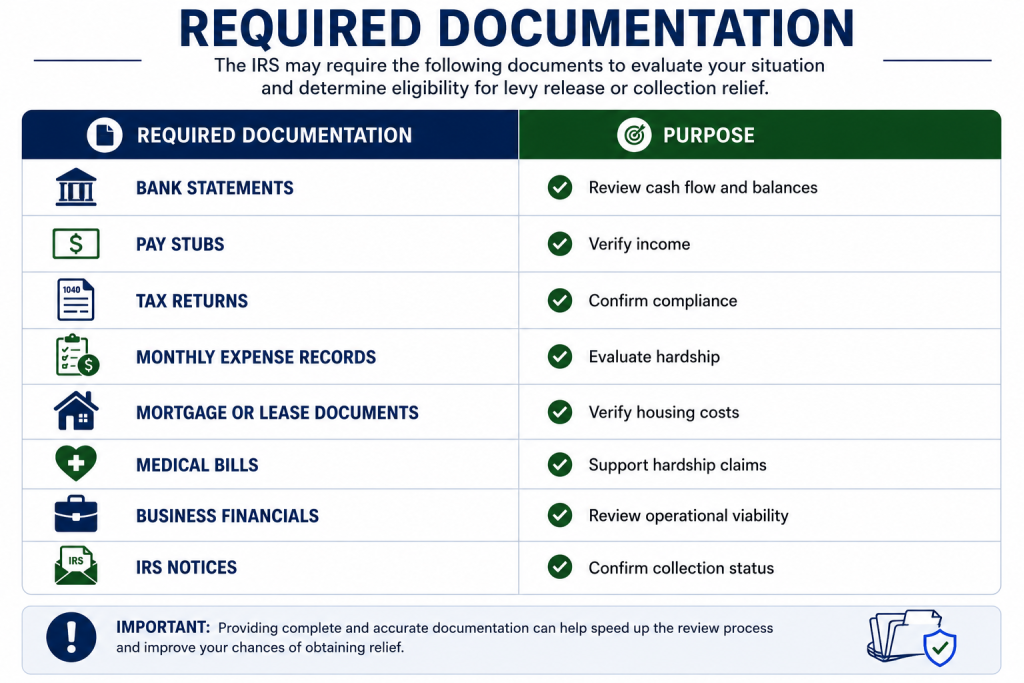
Incomplete or inconsistent documentation can delay levy release decisions.
What Is a Levy Release?
A levy release is an official IRS action that removes or withdraws an active levy.
A levy release does not necessarily eliminate the tax debt itself. Instead, it stops the immediate enforcement action.
Situations That May Qualify for Levy Release
Possible qualifying circumstances include:
- Economic hardship
- Incorrect levy procedures
- Bankruptcy protection
- Approved IRS payment plan
- Expired collection statute
- Identity theft issues
- Innocent spouse considerations
The IRS evaluates each case individually.
Why Many Taxpayers Hire a Levy Release Attorney
IRS levy cases can become highly stressful because financial accounts, payroll, and business operations may be interrupted without much warning.
A levy release attorney may help:
- Communicate directly with the IRS
- Analyze financial disclosure requirements
- Identify procedural violations
- Negotiate collection alternatives
- File appeals
- Prevent avoidable mistakes
- Reduce delays during emergency situations
At Tax Law Advocates, Yongho David Cho works with taxpayers facing bank levies, wage garnishments, and aggressive IRS enforcement actions. Jamie Roman also assists clients in organizing financial documentation and navigating IRS resolution procedures.
H2: Common Mistakes People Make After Receiving an IRS Levy
Ignoring IRS Notices
Many taxpayers believe the IRS will eventually stop collections if they wait long enough. In reality, unresolved balances often continue escalating.
Moving Money Between Accounts
Attempting to hide assets or rapidly transfer funds may worsen the situation and create additional legal complications.
Filing Incomplete Financial Forms
IRS financial statements must be accurate and supported by documentation.
Waiting Until Property Is Scheduled for Seizure
The earlier taxpayers act, the more options are usually available.
Can an IRS Levy Be Stopped Immediately?
Sometimes.
Emergency levy release requests may succeed when:
- The taxpayer cannot pay necessary living expenses
- Payroll cannot be met for employees
- The levy creates severe medical hardship
- The levy was issued in error
- The taxpayer recently entered compliance
However, the IRS generally requires supporting financial evidence before approving emergency relief.
Tax Levy vs Tax Lien
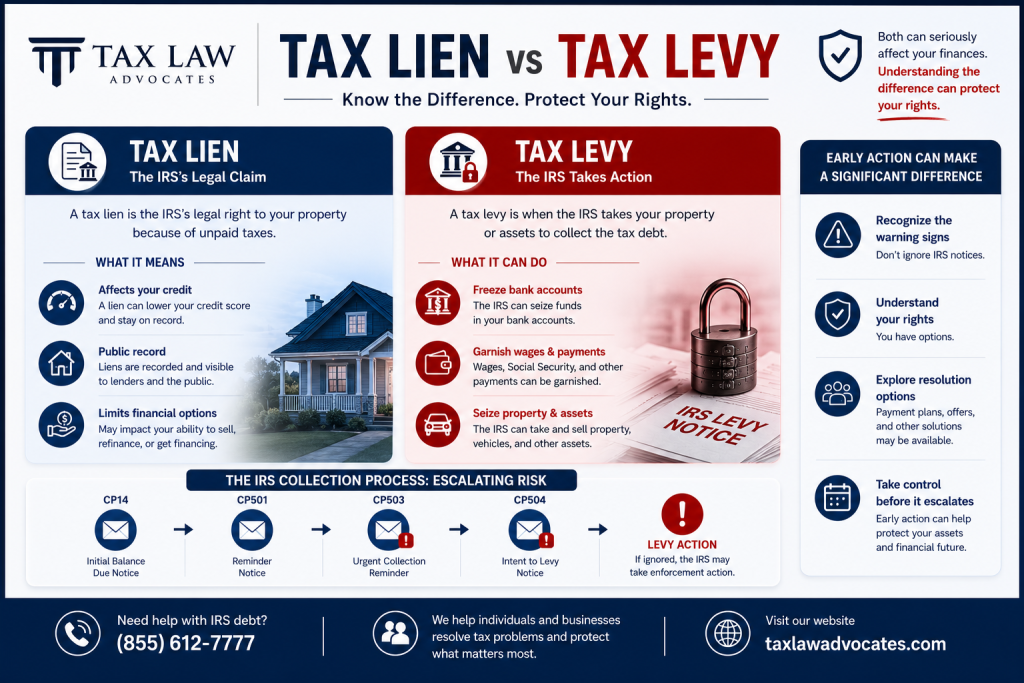
Understanding the difference is critical because many taxpayers confuse liens and levies until enforcement begins.
When to Contact a Stop Tax Levy Attorney
Taxpayers should strongly consider professional guidance when:
- Bank accounts are frozen
- Payroll is affected
- Multiple IRS notices were ignored
- Property seizure threats were received
- Business operations are at risk
- Large tax balances are involved
- Appeals deadlines are approaching
IRS collection deadlines and response windows can move quickly.
Final Thoughts on How to Stop a Tax Levy
An IRS levy is serious, but it does not always mean the situation is hopeless.
In many cases, taxpayers still have opportunities to:
- Request a levy release
- Negotiate payment arrangements
- Demonstrate hardship
- File appeals
- Correct compliance issues
- Protect critical assets
The key factor is often timing. Delaying action usually reduces available options and increases financial pressure.
Taxpayers facing bank levies, wage garnishments, or property seizure threats should evaluate their legal and financial options as early as possible.
Frequently Asked Questions
How do I stop a tax levy quickly?
The fastest way often involves contacting the IRS immediately, proving hardship, entering a payment agreement, or working with a tax professional to request a levy release.
How long does a bank levy last?
Banks usually hold levied funds for approximately 21 days before sending them to the IRS, creating a short opportunity to request release.
Can the IRS levy my home?
Yes. While less common than bank or wage levies, the IRS can pursue real property seizures in certain situations.
What documents are required for a levy release?
The IRS commonly requests financial statements, bank records, proof of income, tax returns, expense documentation, and hardship evidence.
Does a levy release remove my tax debt?
No. A levy release only stops the active collection action. The underlying tax debt generally still exists unless separately resolved.
Should I hire a levy release attorney?
Complex IRS levy cases often involve strict deadlines, financial disclosures, and negotiation strategies. Many taxpayers seek legal guidance to avoid costly mistakes.
This article is for educational purposes only and does not constitute legal or tax advice. Viewing this page does not create an attorney-client relationship. IRS outcomes depend on your specific financial situation, documentation, compliance status, and procedural posture. If you have received time-sensitive IRS notices, seek qualified professional advice promptly.