
01 The problem
Before finding Tax Law Advocates, Tiara had already hired another firm, one that set her up on a $500 monthly installment plan. To keep up with that payment, she had to reduce her paycheck withholding, which meant that by the end of each year, she owed a brand-new tax balance on top of what she was still paying down.
02 What made it complex
This wasn’t a debt that was shrinking, it was one that was regenerating. Every dollar she paid toward last year’s balance was matched by a new balance forming for the current year, an endless loop that her previous plan never accounted for.
03 What we did
Our Enrolled Agent, Scott, reviewed the case and identified the real problem immediately: Tiara’s income simply couldn’t sustain a high monthly installment and her current-year tax obligation at the same time. We built out Form 433-A to establish that $50 per month was the actual ceiling of what she could afford, confirmed the IRS hadn’t improperly extended the collection statute on her older tax years, and restructured her entire payment plan around that number.
04 Options evaluated
We compared an Offer in Compromise against a Partial-Pay Installment Agreement. The PPIA came out ahead, an OIC would likely have required putting a portion of her retirement account on the table, something we wanted to avoid.
05 The strategy
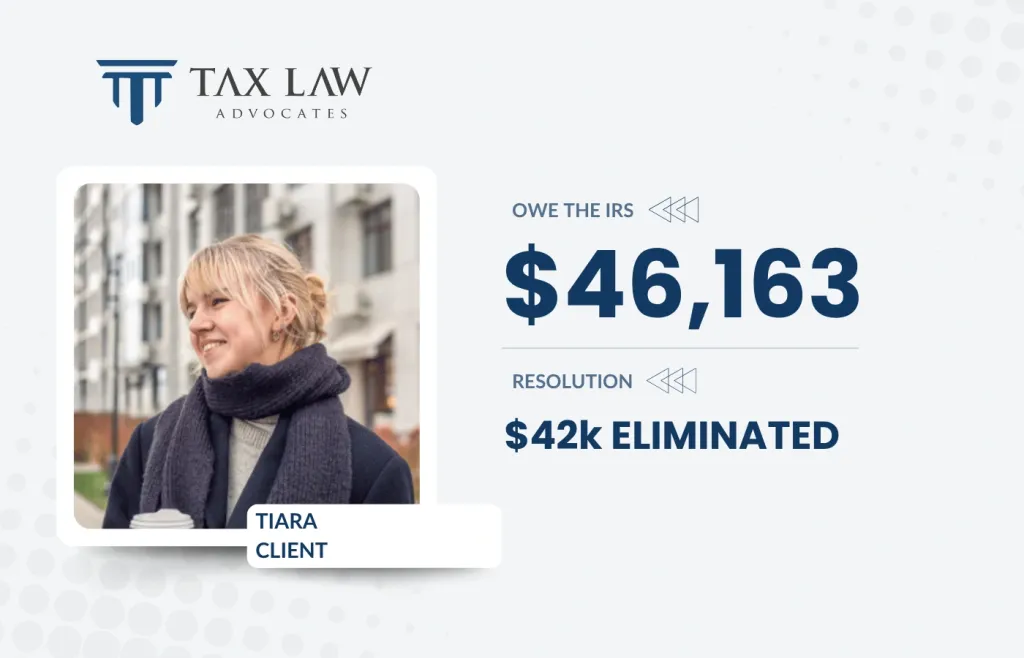
A $50/month PPIA that protects her retirement savings while the collection statute continues to run. Against a $46,163.27 total liability, that structure means approximately $42,000 will never actually come due.
06 Timeline & outcome
In about five months, we stopped collections activity and moved Tiara onto a payment plan built around what she can genuinely afford, one that will eliminate the remaining balance over time instead of generating new debt behind it.