



Offer in Compromise: IRS Program Qualifications & FAQs
Eligibility requirements, FAQs, and how to apply for an Offer in Compromise settlement.
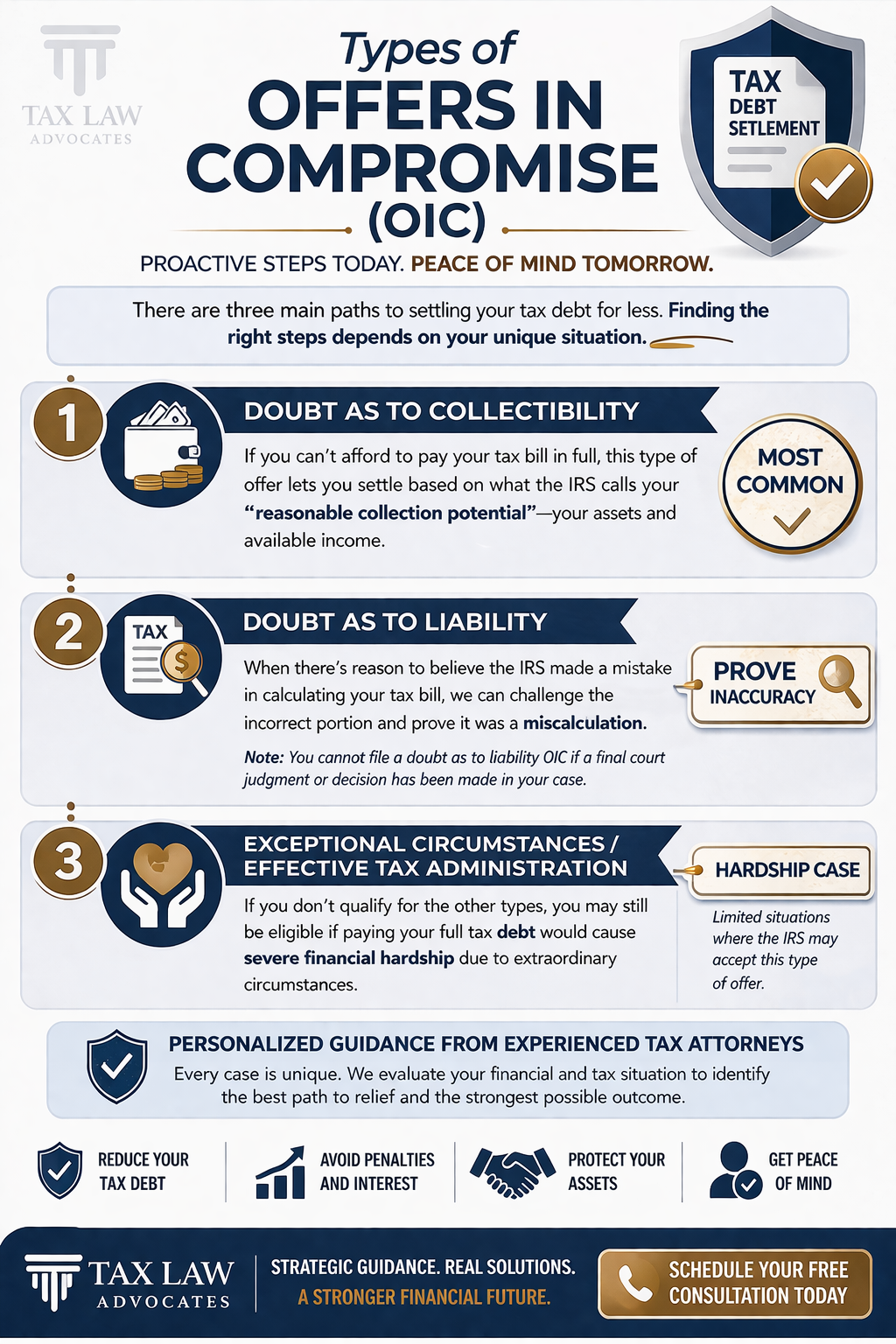
At Tax Law Advocates, we understand how overwhelming tax debt can feel. The stress builds when penalties, notices, and interest keep piling up. For many taxpayers, the Offer in Compromise (OIC) program provides a lifeline.
This IRS program allows you to settle your debt for less than the full balance owed. Below, we explain how it works, who qualifies, and answer common questions.
What Is an Offer in Compromise?
An Offer in Compromise (OIC) is a settlement agreement between you and the IRS. Instead of demanding the full balance, the IRS accepts a reduced amount that reflects your financial reality.
This is usually approved when:
- Paying in full would cause financial hardship.
- Your income and assets are insufficient to cover the debt.
- The IRS believes the reduced amount is the most it can reasonably collect.
How Does It Work?
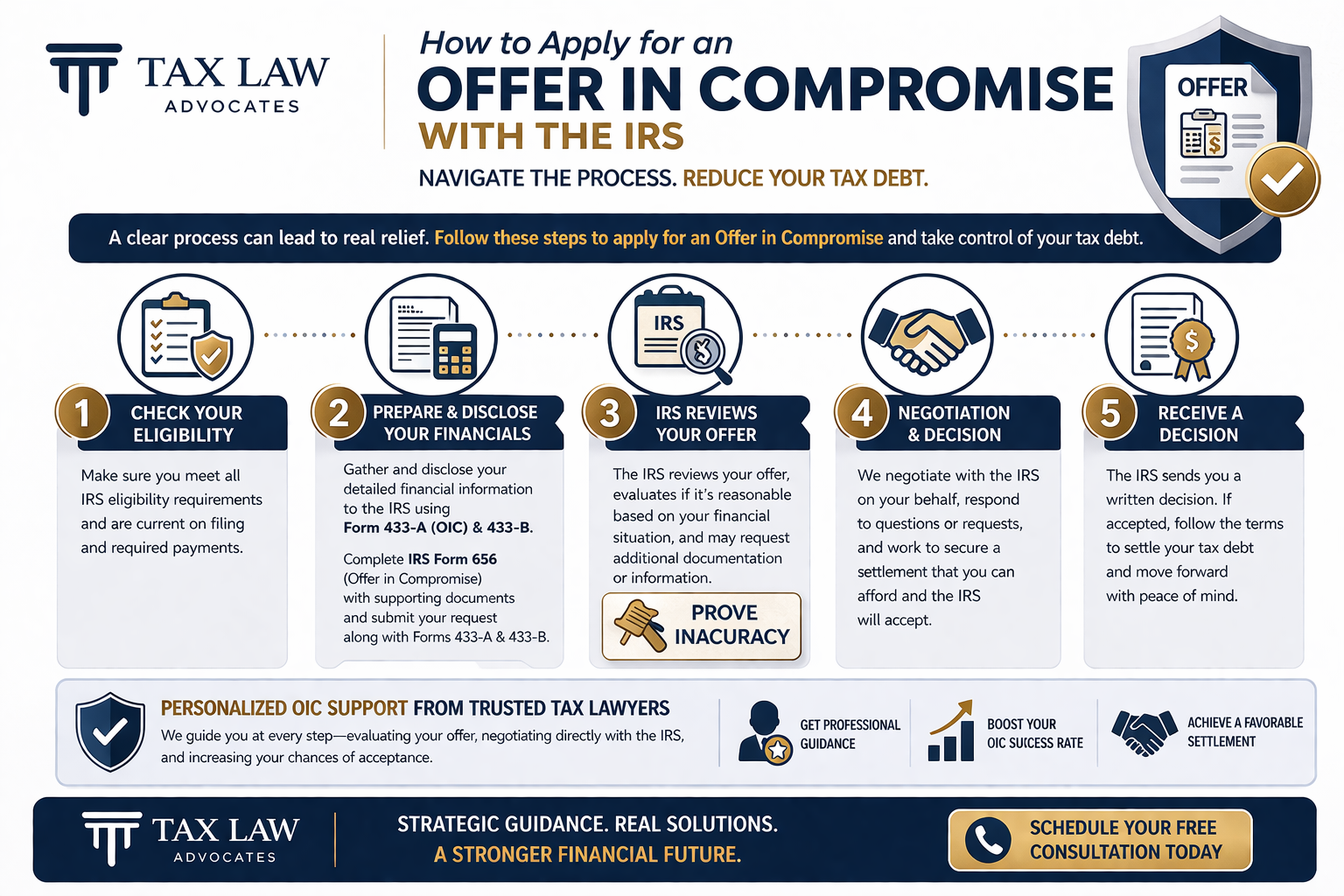
To qualify, you must meet certain conditions. Here’s the step-by-step process:
- File all tax returns – The IRS won’t review your case if you’re missing filings.
- Stay current – All estimated tax payments for the year must be paid.
- Avoid bankruptcy – OIC isn’t available if you’re in an active bankruptcy.
- Submit your application – Using IRS Form 656 and financial disclosure forms (433-A or 433-B).
- Provide full documentation – Income, expenses, debts, and assets will be evaluated.
- Pay fees and initial payments – The application usually requires $205, though low-income taxpayers may qualify for a waiver.
- Await a decision – Reviews can take months, but if the IRS doesn’t act within two years, your offer is automatically accepted.
If approved, you’ll settle your debt by paying the agreed amount in a lump sum or installments. Once paid, your tax liability is legally considered resolved.
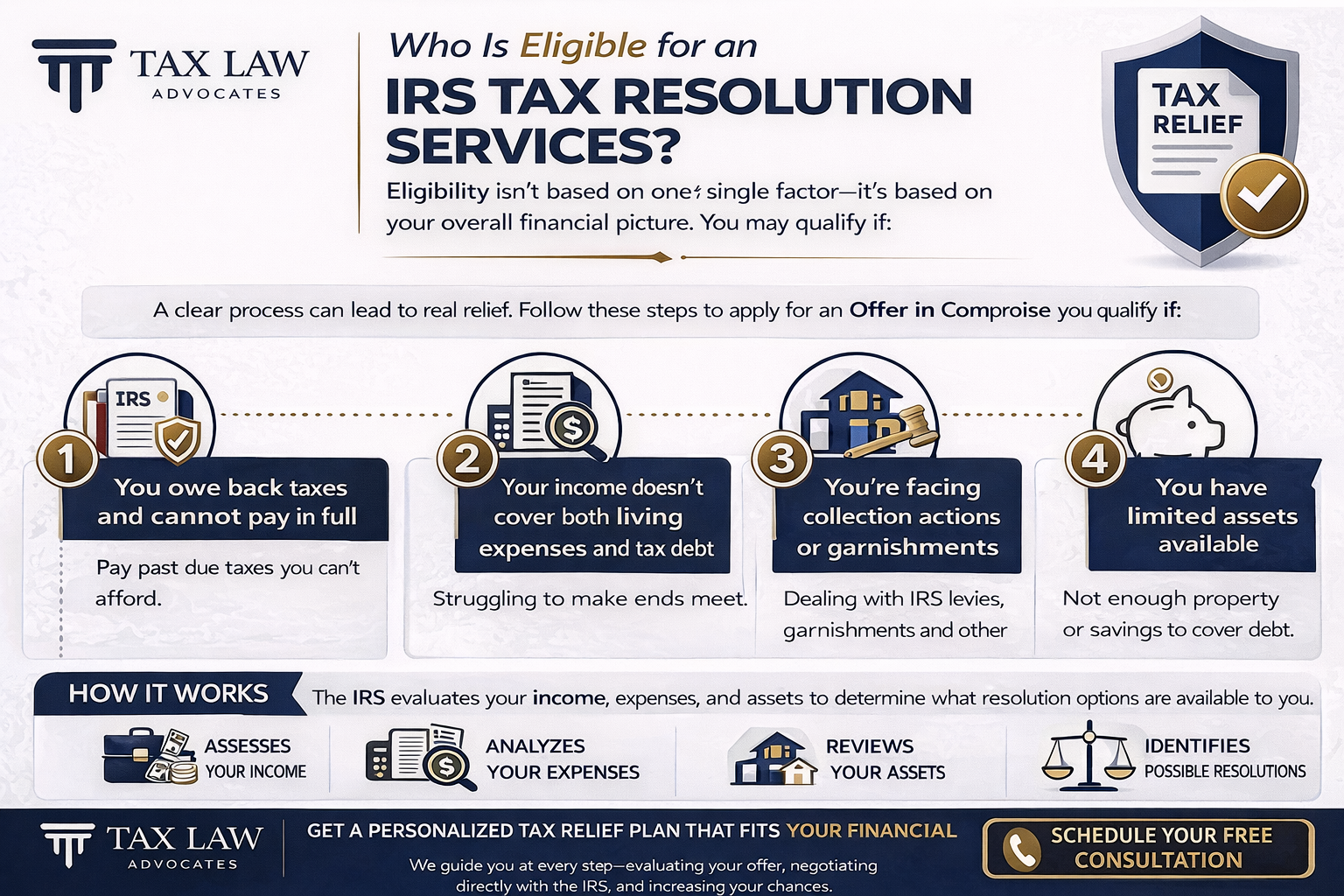
Who Is Eligible for the Offer in Compromise Program?
To apply, you must:
- File all required tax returns.
- Make all required estimated tax payments.
- Not be in an active bankruptcy proceeding.
- Show that full repayment would cause financial hardship.
The IRS will consider your:
- Current and projected income.
- Living expenses.
- Available asset equity.
What Are the Benefits of an Offer in Compromise?
An approved OIC can provide:
- Reduced debt – Settle for less than what you owe.
- Hardship relief – Protect yourself from unmanageable repayment terms.
- Protection from IRS enforcement – Prevent levies, garnishments, and other collection actions.
- A financial reset – Clear your balance and move forward.
Offer in Compromise vs. Bankruptcy
Bankruptcy can wipe out some debts, but it damages your credit and may put assets at risk. An OIC specifically addresses IRS debt without the long-term consequences of bankruptcy.
What Fees Apply to an Offer in Compromise?
The standard IRS fee is $205, plus an initial payment. Low-income applicants may qualify for a waiver.
What Is the IRS Fresh Start Program?
The Fresh Start Program expanded eligibility for settlement options like the OIC. It also introduced:
- Streamlined installment agreements.
- Higher thresholds before tax liens are filed.
- Easier access to penalty relief.
What Should I Know About Tax Liens?
If you owe taxes, the IRS may place a lien on your property. While a lien doesn’t disappear with an OIC, you can request its release once your settlement is complete.
Why Choose Tax Law Advocates for an OIC?
Our team includes tax attorneys, enrolled agents, and accountants with decades of experience. We’ve helped thousands of clients navigate the OIC process successfully.
We provide:
- A full review of your financials to support your case.
- Guidance through each application step.
- Skilled negotiation with the IRS.
We’re proud to hold an A+ BBB rating and an AAA Business Consumer Alliance score—because we fight for our clients.
Offer in Compromise FAQs
What is the success rate of OIC applications?
The IRS accepts fewer than half of OIC applications. Proper preparation improves your chances.
Can I apply if I’m in an installment agreement?
Yes, but you must keep making payments until your OIC is approved.
Can I apply if I have a tax lien?
Yes. The lien remains in place until your settlement is paid.
Can I appeal if my OIC is rejected?
Yes. You have 30 days to file an appeal.
How long does the process take?
Reviews often take 6–12 months, depending on case complexity.
What happens if I don’t pay the agreed amount?
The IRS can revoke your OIC and restart collections.
Will an OIC affect my credit score?
Not directly. However, any related tax liens can impact your credit.
Can I negotiate the amount with the IRS?
Yes, but the IRS only accepts offers equal to your “reasonable collection potential.”
Get Help with Your Offer in Compromise
Tax debt doesn’t need to control your future. With the right strategy, you may be able to settle for far less than you owe.
📞 Call Tax Law Advocates at 855-612-7777 today to schedule your consultation and see if you qualify.
Find Out If You Qualify
What our clients are saying about us
Get Support with Your Tax Problems
Our team of federally licensed enrolled agents, tax attorneys and accountants has years of experience representing clients before the IRS and state tax agencies.
We assist clients in addressing tax problems professionally, with the aim of achieving a positive resolution
Call Tax Law Advocates now at 855-612-7777 or get in touch to schedule an appointment. We’ll guide you through the tax filing process and support you in working toward resolution.
